The Hours We Kept Quiet
Page 146 of 298
Chapters
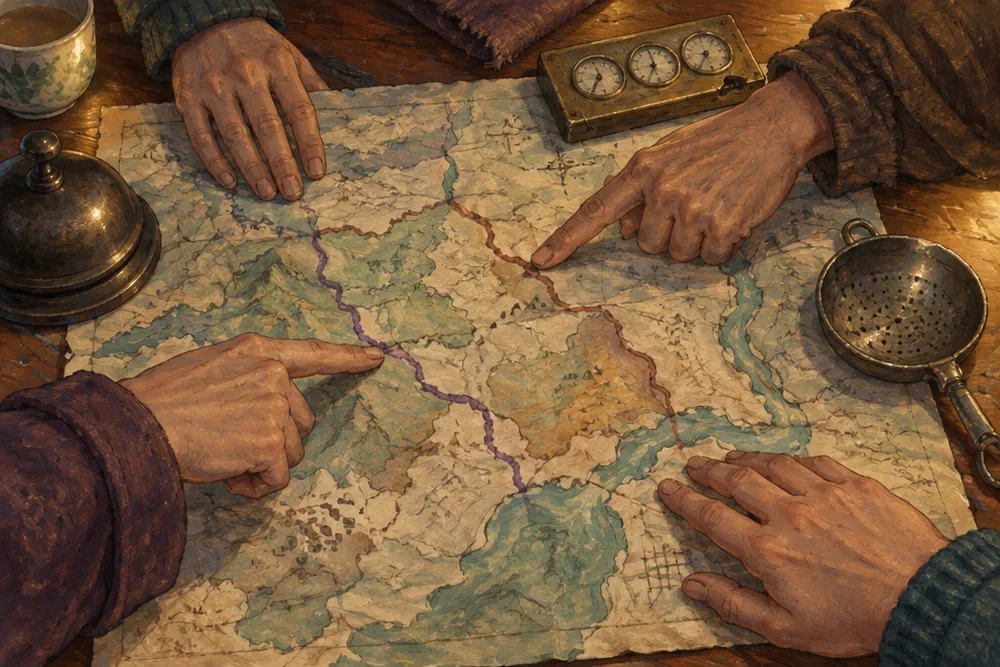
They did not agree about everything. The people whose rooms had already vanished wanted the line to include more of the district, because they had less left to lose. Those whose rooms remained argued that a wider claim could draw the power away from the foundation they needed. Eska listened until the arguments began to repeat, then asked them to point out what their households could actually give up.
“Don’t ask me for a room I don’t have,” one woman said. “Ask me for the cupboard I can carry.”
“And don’t ask us to promise a school we can’t keep,” Eska replied. Her voice sounded younger than she wanted. She set the bell down on the table. “We can teach in the kitchen. We can’t move the oven.”
The woman studied her, then nodded once. She had two children sleeping on a rug by the pantry. “Then put the rug on the map.”
Eska marked it. The map was no longer a picture of walls alone. It held the oven’s reach, a sleeping space, a route for baskets, and the threshold where the bell would hang. It was still only a copy of the lift’s freight plan, but it began to resemble something the district had made for itself.
When she lifted the map, the corner caught against the tea strainer Nell had left on the table. Eska freed it carefully. She was used to carrying the dented strainer; Nell had let her hold it on the first day she admitted Fara. The strainer’s mesh had a small tear, but it still caught the leaves. Eska slipped the map under a crock so it would lie flat while they finished the count.
The new boundary kept the common kitchen foundation, the oven, and the passage that joined them. It included the rooms immediately attached to those spaces, though some people would have to share and some would have to leave. The schoolroom lay outside. So did the far laundry rooms and the street where Threadwalk had once opened into a row of doors.
Eska walked that street with the cord in her hands. The walls there were still visible, though the plaster had thinned to a pale frost at their edges. A door swung open when she touched it; no one answered from inside. She did not go in. She knew what a room meant when someone else had already lost theirs, and she did not want to pretend that a blank doorway was a harmless thing.