The Drawer of Unclaimed Keys
Chapter 3 · Price of a Counter
Page 21 of 226
Chapters
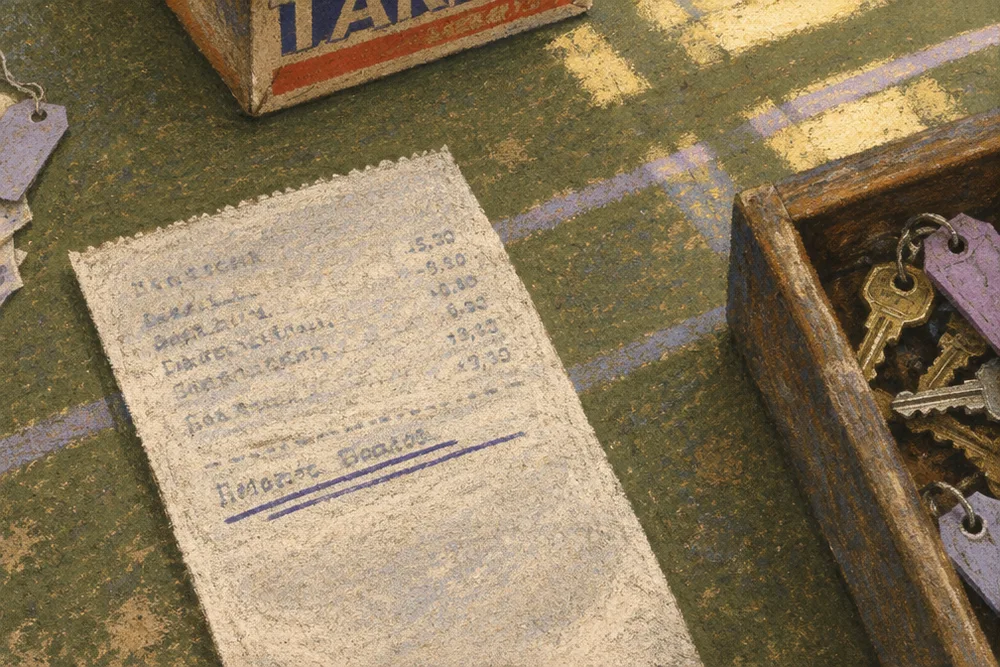
Ruth’s permission settled one key, not the drawer. Lenora wrote the fact on the back of the receipt Pascal had brought her, because the proper notebook was buried under Ravi Tembikar’s measuring tape and a stack of price tags. Ruth had said Pascal could fetch the spare for the visit they had arranged. She had not said he could keep it. Lenora underlined the difference, then wished she had not made it look like a reprimand.
The shallow drawer sat on the counter beside a carton marked TAKE. Its brass pulls were dulled where Mavis’s fingers had opened it thousands of times. The keys inside lay in loose rows, each on a paper tag, some with names, some with street numbers, some with handwriting Lenora knew from rent envelopes. There were fewer than she had imagined and more than she wanted to count.
Ravi came through the south-facing door carrying a steel tape and a clipboard. In his navy utility vest, he looked as if the laundromat were already a room he had to make useful. He measured the counter from the corner nearest the till to the chipped tile beside the detergent shelf. Then he crouched to inspect the wiring. His broken left eyebrow rose when he saw the drawer.
“That part isn’t in the sale,” Lenora said.
“I haven’t asked.” He stood, rubbing chalk dust from his fingers. “I’m working out what I’m buying.”
The distinction annoyed her because it was reasonable. Ravi had bought the washers, dryers, and the right to operate them without a staffed counter. He could afford the equipment and the repair work, not someone sitting here through every cycle. His offer had been clear from the beginning. Lenora had accepted it. Still, as he measured the space where she had spent most of her adult life, she felt the old impulse to make herself useful before anyone could notice she was leaving.
“I want to ask what one staffed shift would cost,” she said.
Ravi glanced at her, then at the drawer. “One shift a week?”
“For the first month. Maybe just Saturdays.”
“You want me to price it, or tell you whether I think it’s a good idea?”
“Price it first.”
Ravi unfolded the clipboard’s second sheet. He did not say that a person at the counter would make customers feel safer or that the old arrangement had been part of the neighborhood. He asked what hours Lenora meant, whether she would handle change, and if she expected to clean the lint traps between customers. She answered each question with the specificity of someone who had learned not to offer a vague promise that could become a whole job.