The Dead Get Their Post
Page 43 of 267
Chapters
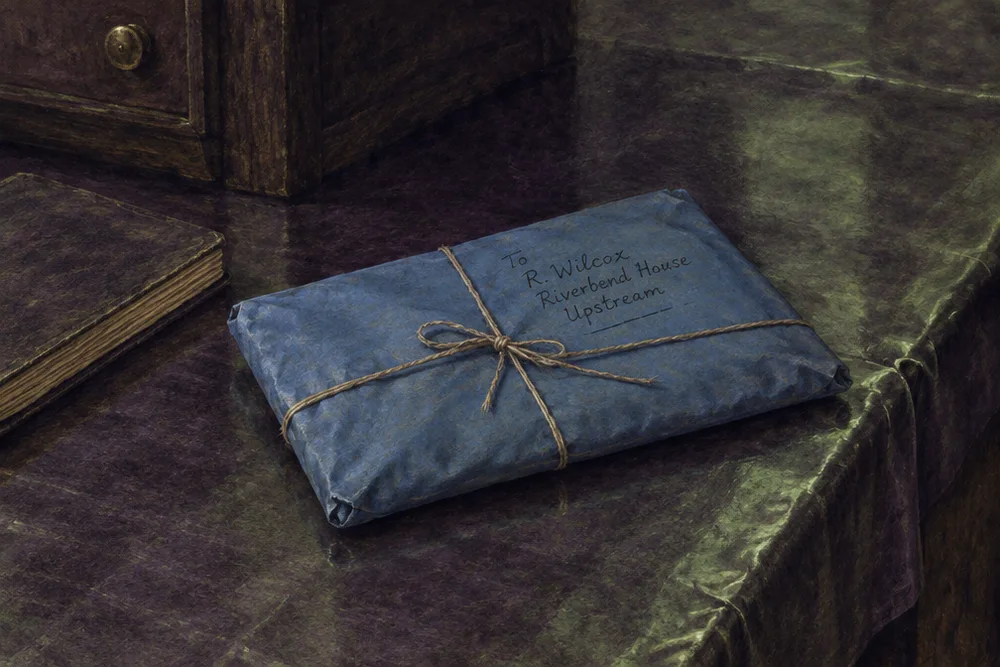
He reached for the second cupboard key, then stopped. There was a particular packet he had not meant to show anyone. It was wrapped in blue paper and tied with a faded flax thread. The packet had been held back when its route was made, kept in the drawer behind the stamp pad, then moved to the cupboard when he could no longer bear to see it each morning. He had told himself the envelope was misdirected. It was addressed to a woman born upriver, a relief postmaster assigned to Sedgewick Reach before she had ever set foot in it.
“There’s another record,” he said. Merryn’s eyes narrowed. “You said you were showing everything.” “I am.” He unlocked the lower drawer. The brass key turned with a dry click. Inside, beneath a stack of blank forms, lay the envelope. Its flax tie was tied in a knot that had been opened and tightened again. The paper was old, but the inked address remained legible. He lifted it with both hands, not because it was fragile but because he had spent so long treating it as if it were dangerous.
“Who is it for?” Iona asked. “Elspeth Rusk. She was appointed relief postmaster in 1846.” “And she was born where?” “Upstream, in a mill town.” “Then why is it here?” “Because the person who prepared the bundle noticed.” Zebedee placed the letter on the counter. “The first postmaster’s daughter had just been born. Alwen’s relief was expected to take the route. Someone saw the birth entry and understood that the new postmaster would not qualify. They held this envelope back rather than send it with her.”
Merryn read the address without touching the paper. “Was there a dead addressee?” “A man called Peter Dowe. He had lived in a net shed near the upper tramway. He had no kin recorded.” “And what happened to him?” “The envelope was never stamped.” “So he stayed where he was.” “I don’t know.” Zebedee hated the weakness of the answer. He could not know whether Peter Dowe had been dead when the envelope was prepared, or whether he had been waiting for the letter before his death, or whether the old clerk had invented the precaution after watching someone vanish. All he knew was that the address had been left unfinished. “The letter remained here. It’s the only one I’ve found.”