The Dead Get Their Post
Page 202 of 267
Chapters
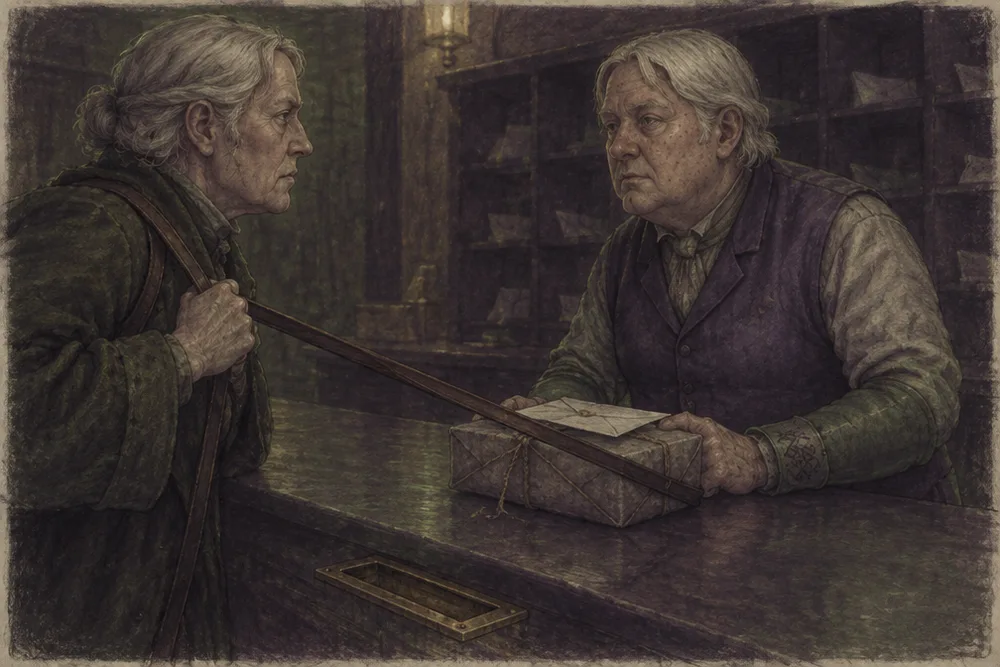
“You’ve got it,” said Mrs. Hales. She was a narrow woman with a knitted cap pulled low over her ears, though the shop was warm. Her daughter had died last winter, and her address was among the names in the bundle. “Thursday’s here. You know what happens when you leave them sitting.”
“I know what used to happen when I stamped them.” Zebedee kept both hands flat on the counter. The sleeve guard on his right arm had ridden up, showing the black ink seeped into his cuff. “The dead went to the far bank.”
“And the houses were quiet.” Mrs. Hales’s fingers closed around the strap of her bag. “I have not had a full night since my girl began knocking. You can’t ask me to keep listening while you make a point.”
“I’m not asking you to listen alone. There’s room in the grading shed. The workers opened it Tuesday. There are bunks, and a side entrance. You can have the first berth if you want it.” He said the words slowly, like a man reading an address he had once misplaced.
She stared at him. “A shed isn’t my daughter.”
“No.”
“You’d have her sleeping in the fish smell while you keep her letter on a shelf?”
“I would have her somewhere no one has sent her against her will.” He heard how weak that sounded. The dead had already been sent against their will. The correction was for those not yet stamped, and it did not repair a single route already made.
Mrs. Hales leaned closer. “You have a stamp. You have a job. Do it.”
Zebedee looked at her cap, at the thread caught loose above her left temple. He had once thought a proper procedure was a kind of shelter. If he performed it precisely, then the harm belonged to the custom, to the old book, to the person before him. The stamp had let him keep his hands clean while making every Thursday’s decision look like office work.
“I won’t stamp them.”
“Then you can say that to everyone whose dead are at their doors.”
“I will.”
“And what do I tell my girl?”
He had no answer that could carry the weight she had put on it. He could offer the shed, a lamp, a blanket, the choice to leave. He could not offer her daughter back. He could not make an envelope into a person’s consent. “Tell her you have a place for her to sit with you, if she wants it. Tell her she doesn’t have to go anywhere today.”