The Dead Get Their Post
Page 181 of 267
Chapters
“I can test it.”
“Not with your ribs.” Tamsin looked at Merryn. “We have sand sacks.”
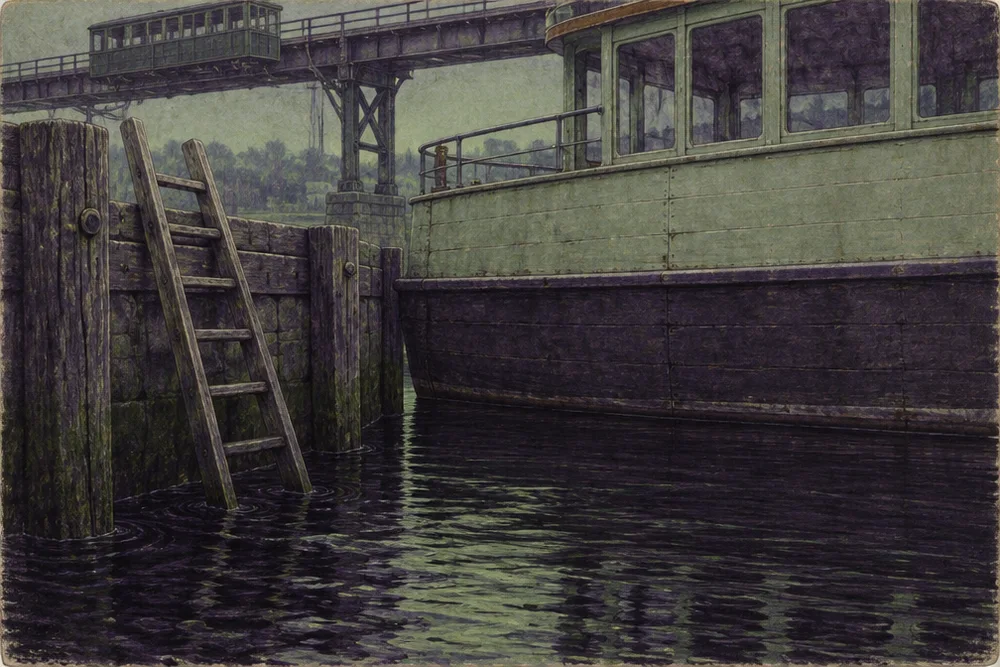
Merryn nodded. They carried the ladder out with a pair of sacks. At the slip, Tamsin braced it against a stone edge while Merryn tied a rope around the top. They laid a sack across the lower rungs and eased it down, watching for a twist. The wood creaked but held. Tamsin pulled it up and checked the lashings.
“Good enough for sacks,” she said. “Not a person until we know the far end is stable.”
The carefulness was not a refusal. Merryn had to remind herself of that. She had grown used to the way a task went wrong when people hurried because the whole village was waiting. The ferry had not been waiting for years because nobody wanted it. It had been blocked by keys, money, work, custom, and the practical fact that a boat could drown its passengers. Wanting to help did not change the water.
They carried the ladder down to Tongue Slip and set it beside the ferry. The vessel rocked slightly against its moorings. On the far shore, the two white sheets had dropped from sight. Merryn could not tell whether the people there had gone, or merely lowered their arms. She raised one hand and waited. Nothing came back.
“They may be tired,” Noll said.
“Or we may have lost them behind the orchard.”
“Or they’re waiting to see what we do.”
Merryn looked at the board. The marks for the landing, the boat and the ladder crowded its surface. She erased the question and began again, leaving space between each drawing. Low stair. Ladder. Boat. She added a clear cross beside the ladder and a question mark beside the boat. She showed it to Noll.
“What does the cross mean?”
“We bring the ladder. We don’t bring passengers unless they ask.”
He studied the board. “That’s what the boat means too.”
“Then we don’t need the question mark.” She rubbed it out.
The far bank remained still. Merryn set the board against the piling and walked the length of the slip to judge how the ferry would approach. A cross-current pressed at the stern. If she brought the bow in too close, the hull might swing and strike the landing. The low stair was below the orchard path; from this distance she could not see the final step. Even a clear invitation would not make the approach safe.
Iona had gone back toward the shed. Before leaving, she called, “If you do cross, don’t put the workers’ handcart aboard. It’s needed for the berth.”