The Dead Get Their Post
Page 154 of 267
Chapters
He looked at the stool, then set it down by the wall again. He turned it a little so that the next person wouldn’t have to twist to see the door.
The girl with the slate had the short basket open on the table. She was separating the hooks the graders had left tangled together. “When those two came up, they could see right in,” she said. “It’s worse when the crews finish. They come up three or four at a time to put things away.”
“Somebody will have to be here when they do,” Iona said.
From below came a call for the basket. The girl lifted it, hesitated, then handed it to the worker nearest the door. He took it down for her. Merryn put her oilskin on. She could hear the tide under the floor now, between the sounds of work. She had missed the lower blocks. She stayed where she was while Iona asked who could still be in the shed once the evening trays were turned out.
The workers agreed to open the shed on that basis, but they did not call it settled until they had chosen how to keep the agreement. Iona would not be the sole keeper. She had the grading shifts to run and a sister whose choices were still being made into village business by everyone who heard her name. Peret offered to take the first watch, then withdrew it when the tramway crew reminded him he had a load due before dawn. The girl with the slate volunteered for the evening and named another worker for the morning.
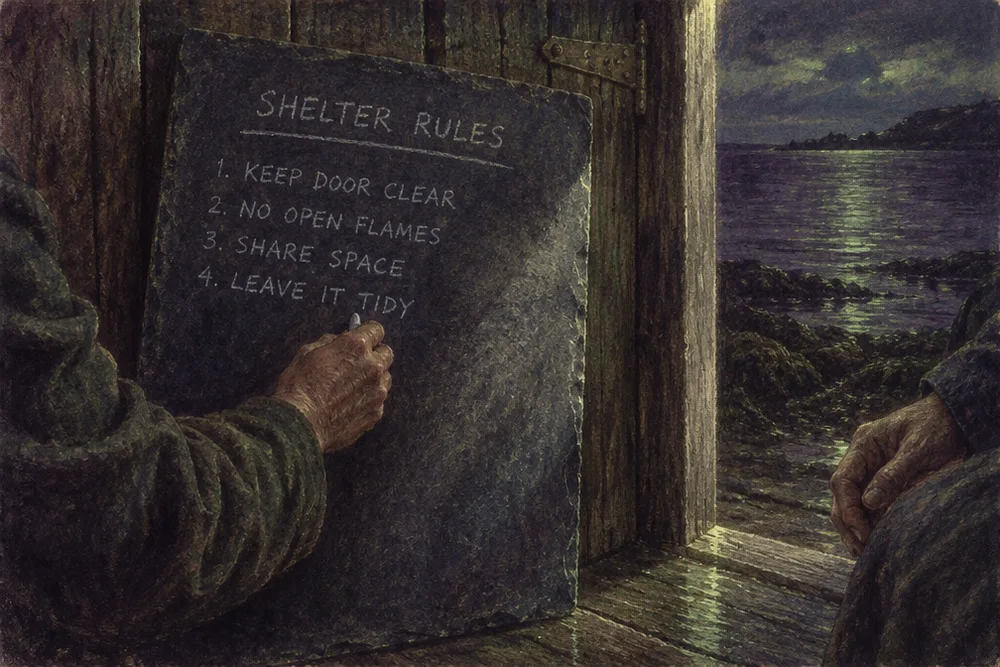
Merryn wrote no names down. Instead, the workers set a slate by the door. One side would show how many beds were available; the other, how many were occupied. Any person could turn the slate. It would not say who had come, or where they had gone, or whether they meant to return.
“If the shed is full, it’s full,” Iona said. “Nobody gets to put a mark beside a name and wait for the next person to leave.”
The agreement had teeth now, though they were small ones. No household could reserve a berth. No household could claim the shed as an extension of its rooms. No list of addresses or births would be kept. A person might ask for messages to be carried, but the keepers would ask permission before telling anyone they were there.
Merryn watched the girl write the rules on the slate. She used the whole face of it, leaving no blank space for a future column. The wording was plain, not official. That, Merryn thought, might help it remain something people could read without needing permission.