The Cup That Held Winter
Page 7 of 9
The first snow went sideways. It ran off the table in two white ropes, then spread low over the stones. Orla heard the wash of water under a boat. The pump stood right through the sound of it, with its iron handle sticking out over a white bank.
“There's the mill bend,” someone said from beyond the lamp.
“No, look farther out. That's the willow.”
Orla recognized the long branches she'd seen on the bathhouse floor. They dragged into a narrow stretch of dark where no snow settled. Beyond them the banks swung back much more sharply than she'd expected. She had walked a straight line across the square all her life. She hadn't known a river could turn so hard in so little space.
Chalk began to scratch on the stones. The ferrymen called out the places the dark thread crossed: the corner of the table, the old ring where pack animals were tied, the pump's back foot. One told the other to put the mark a handspan farther left. For once, the other didn't argue. Orla held up the lamp so they could keep going after the far bank thinned.
Then, close to her elbow, came the little squeak.
She turned. Tovin hadn't moved. The laugh came again, fuller than it had in the bathhouse. There was a pause in the middle of it, just long enough for someone to take a breath with her mouth full of bread. Tovin bent his head. His own laugh caught him by surprise. He put a hand to his chest as if he could feel where it had come from.
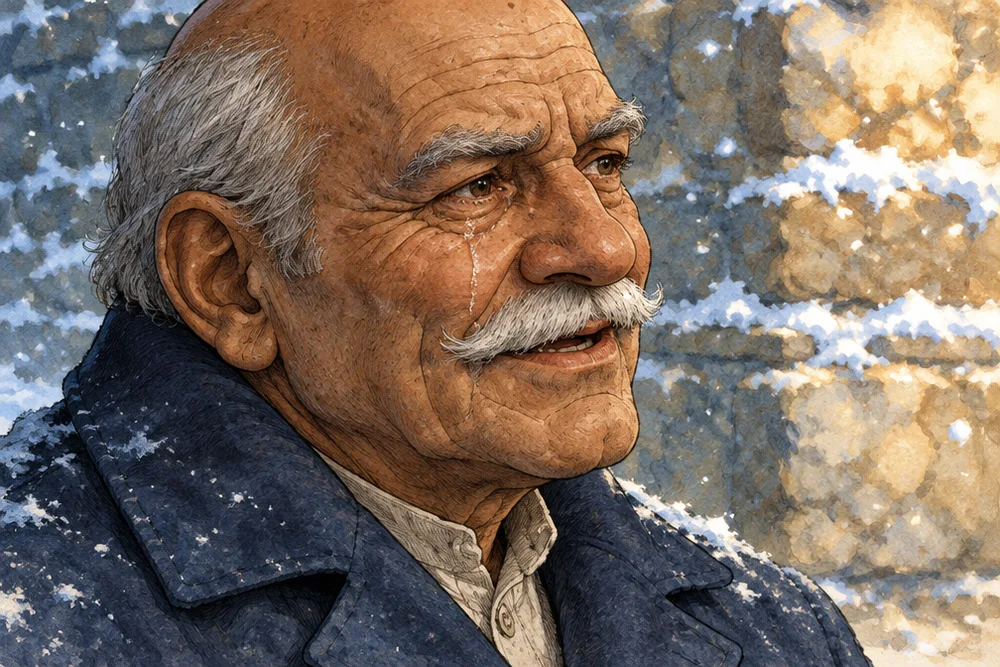
Orla looked down at the lamp. By the time she looked up again, he had straightened. There were tears on his face, and he made no move to wipe them. He rested two fingers on the bare stone beside the cloth. The cup lay in pieces. Nothing more came out.
The snow crossed the rest of the square in a loose white sheet. It drifted up the bakery wall and hung for a moment at the mouth of the oven. A sound like a long breath came out of the bricks. Then the snow was gone.
Under the lamp the old river was a crooked trail of chalk on wet stones. Tovin stepped over it on his way to Orla, though by then there was nothing there to wet his shoes.