The Bridge That Remembered Otherwise
Page 4 of 8
The marker stood by the roadside with a crust of frost on its slanting face. The head elder scraped the letters clear with the edge of her mitten. Ismay had passed them every day on her way to the workshop, but she had never had cause to read them aloud.
AFTER THE FLOOD, FOR THE SAFETY OF ALL, THE VILLAGE KEPT ITS CROSSING.
“Take those words to the door,” the head elder said. “They're what we've said at the first frost for as long as I remember. We generally say them up here, before anyone goes across. I was late this morning.”
“Who does ‘all’ mean?” Ismay asked.
The other elder tugged at the cord joining his mittens. “The carver didn't leave us a list.”
Ismay looked from the marker to the bridge. She could read one sentence and be across in time. She could stand under the fair arch with her apron clean side out, while all the shutters lifted at the sound she had made. She had practiced holding the bell high without letting her elbow wobble.
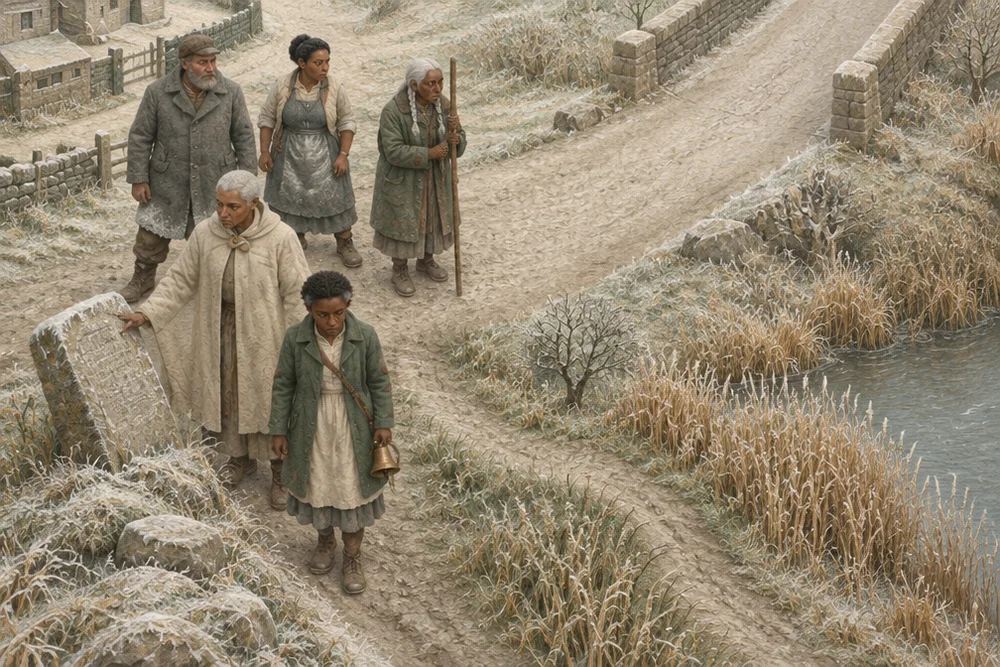
“If I say it,” she asked, “can Nella cross after me?”
The head elder wiped frost from the word ALL with her bare thumb. “The old toll chain is still in its box,” she said. “We haven't had to take it out for years. The far bank knows not to come over.”
That was the answer, then. Ismay thought of Nella going home in her clean collar. An invitation could get you all the way to a door and still not get you a seat.
Below the road, the old ferry path bent through the sedges. In summer Ismay sometimes took her lunch there to watch the water run under the bridge. From the landing she could see a post on either bank, each worn in the same place by a rope. Nobody had bothered to carve anything on either of those.
She tucked the apron through her belt and went down the path. The head elder called after her that the bridge was the other way. Ismay knew. She went carefully because the path was slick, and because now that she had decided where to ring the bell, she didn't want to ring it by falling on it.