The Brass Vowels of Winter
Page 25 of 196
Chapters
“And if someone speaks downstairs?”
“It may pick up a little.”
“Then the boy stays with me. No one else comes up.” She looked at Evan. “You may stop at any time. If you want to hear the cylinder, you’ll hear it first. If you want it destroyed, tell me. I won’t ask you to leave it here.”
Evan’s weight rested on his heels. He took a moment before he answered. “I want the words to stay long enough for someone to read them against the book. I don’t want a room full of people listening to my voice for sport.”
“That’s sensible,” Nessa said. “This room is not a public stage.”
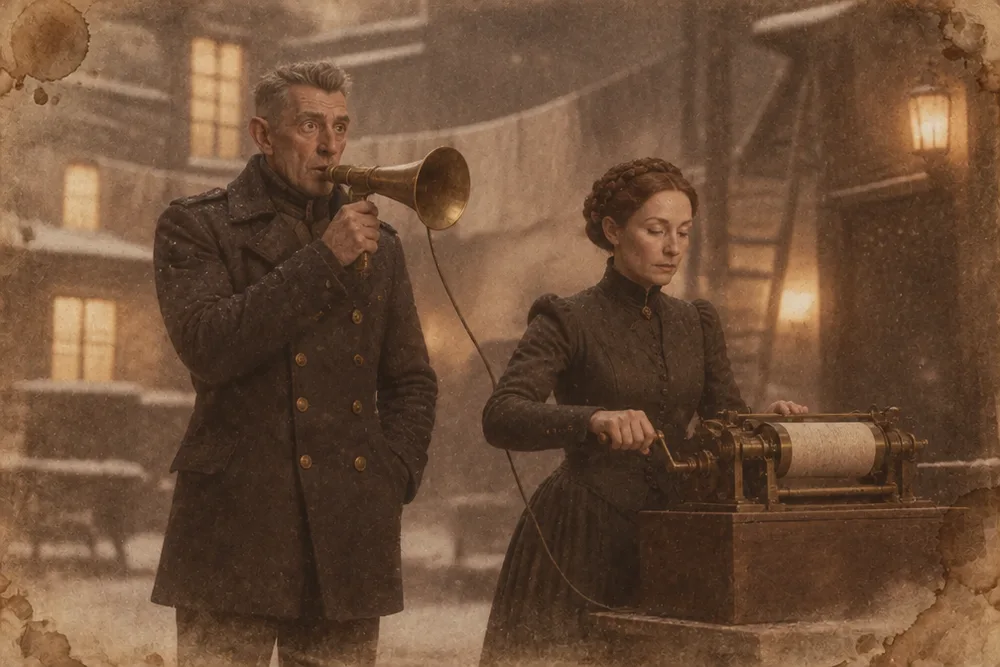
Odelia sat on the nearer stool and lifted the horn into place. She had wanted, since beginning her apprenticeship, to be entrusted with a bench of her own. When Ada let her cut a cylinder without supervision, Odelia’s hands had trembled only afterward. But this was not the shop, where customers came to hear a phonograph sing or to preserve a message for a relative. Here the machine was being asked to hold something that could cost a man his wages.
She checked the wax surface. The fresh cylinder was dry, clean, and unmarked. Its pale amber curve seemed almost featureless beneath the lamplight. Odelia adjusted the recorder’s position, then turned her head toward Evan. “When you’re ready.”
Evan took off his coat and hung it on a peg. Beneath it, his shirt was patched at the elbow and thin at the collar. He unwound the pale muffler, folded it once, and set it beside his cap. For a moment he seemed uncertain where to stand. Odelia showed him the mark she had made on the floor with a short piece of chalk: close enough for the horn to take his voice, not so close that his breath would strike it.
“Do I say the name first?” he asked.
“Say it as you want it kept. Then the tally, the shift, and anything you want attached to those.”
“Will you ask questions?”
“Not unless you ask me to.”
“No.” He considered. “I’ll say it myself.”
Odelia nodded and put her hand to the crank. She had to turn it at a steady pace while the cutting stylus traced the voice into the wax. Too quickly, and the sound would be rough. Too slowly, and the cylinder could falter. The pace lived in her wrist and her ear, not in any mark the machine could make for her.