The Brass Vowels of Winter
Page 167 of 196
Chapters
Miriam asked what linked the book to the dock shifts. Nessa explained that some damaged linen had been brought down from the freight sheds and patched at the laundry. The women recorded repairs by date and tally because the harbor charged for damaged goods, and the laundry needed proof of what it had mended. She opened to a page with narrow entries in brown ink.
The entries were brief: a date, a tally number, a repair, and the initials of the worker who received the bundle. A smear of old oil darkened the margin but not the writing. Nessa showed the chair how the corresponding marks had been made in the linen account at shift’s end, not copied later from a harbor list.
Miriam leaned over the page. “Can these tallies be matched to the men’s slips?”
“They match the numbers on the slips I was shown. The names on the collection marks are the names the men signed when they brought the linen back.”
“You can swear that the book was kept at the time?”
“I can swear that I made the entries. My women made some of the marks. They are here to confirm their own work, if you need them.”
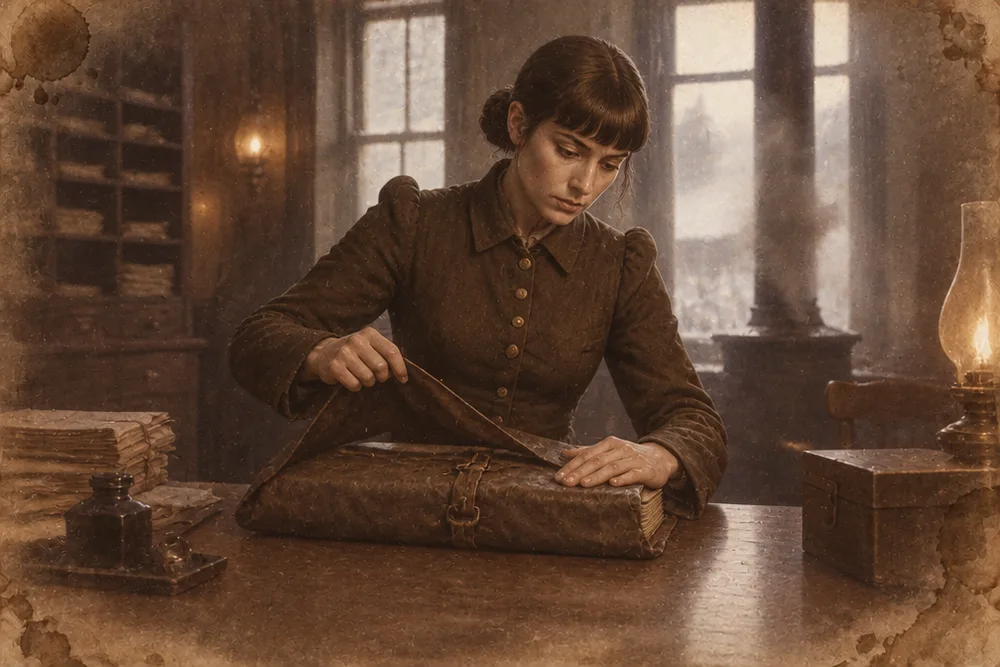
Nessa’s fingers remained on the open page, protecting the rest of the book from the room.
Miriam asked whether the book had been altered since the entries were made. Nessa showed her a seam repaired with thread and a strip of oilskin. The repair crossed no writing. A penciled note in the margin recorded when the binding had been mended, and the following pages carried on in the same hand and order.
“I repaired the cover because the steam loosened it,” Nessa said. “The book was not made to prove a wage claim. It was made so I could bill for the work and know what my women had finished.”
“That is not a defect,” Miriam said. “It is a reason to examine what it records.”
Odelia, standing by the door, watched the chair compare the linen entries with the shift slips. On three disputed dates, the same tallies appeared in both books. Two collection marks sat beside each date: one with Ivo’s signature, one with Evan’s. The women’s initials followed the repairs, confirming that the damaged bundles had returned to the laundry after those shifts.
The office’s lawyer inspected the pages without touching them. He asked whether Nessa could identify the two men from their marks alone. She said she had not been asked to identify faces when she made the entries. The signatures were theirs as far as she knew; the men had signed before her, and she had watched them do so.