The Brass Vowels of Winter
Page 131 of 196
Chapters
Miriam's fingers closed over one another. “That is a useful distinction. We will now hear how the cylinder came to be called live.”
Ada Pell stood from the second bench. Her narrow, rigid posture made her appear taller than she was. The auburn braids pinned around her crown had scarcely loosened during the passage from Ternreach, though a dark trace of ink remained at one cuff. She carried no machine and no cylinder. The harbor contract had been hers; the machine and the booking sheets were still in her shop, at least until she had chosen what she could afford to risk.
Miriam asked, “You maintain the recording shop in Ternreach?”
“I do. My apprentice, Miss Crannick, worked under my direction on the harbor commission.”
“And you have brought a booking sheet.”
Ada unfolded a ledger page and handed it to the clerk. Its columns were ruled in blue pencil. Odelia recognized the compact hand, the dates and times entered in Ada's exact upright script. One entry had been underlined: the date on the official cylinder's label. Beside it, in the narrow time column, Ada had written: Rusk—office roll, after dismissal; machine returned for cut.
Odelia's throat tightened. She had not seen the sheet since they left the port. Ada had carried it through the crossings folded inside her bodice, where water could not reach it. The faint creases marked the journey.
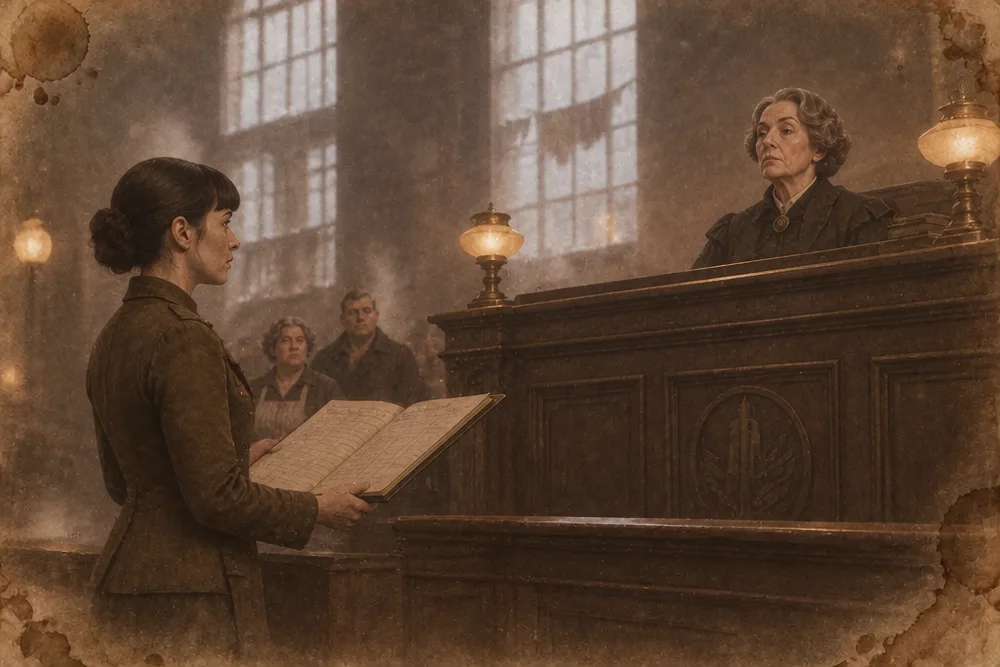
The clerk read the entry aloud. “The booking records the cylinder as cut after the men were dismissed?”
“It records Mr. Rusk's use of the shop and machine at that time,” Ada said. “I was there. The two dockhands had already left. I did not hear either of them answer the roll.”
The solicitor rose. “You are the machine's owner. Your sheet is not an independent record of your own recollection.”
“No,” Ada replied. “It is my business record. It was entered before this dispute, in the ordinary course of my work. You may question me about it.”
The distinction seemed to settle something in Odelia. Not the truth of every sound, nor the debt, but the ground on which a claim could stand. An entry made for shop accounts had survived because it had been made for shop accounts, not for a hearing.
Miriam asked Ada to step closer to the table. “Was the machine kept locked?”
“No. It was on the shop bench. Mr. Rusk had authority to commission the cut. The question is what the cut represented.”