The Bell Was Not Carried
Page 65 of 257
Chapters
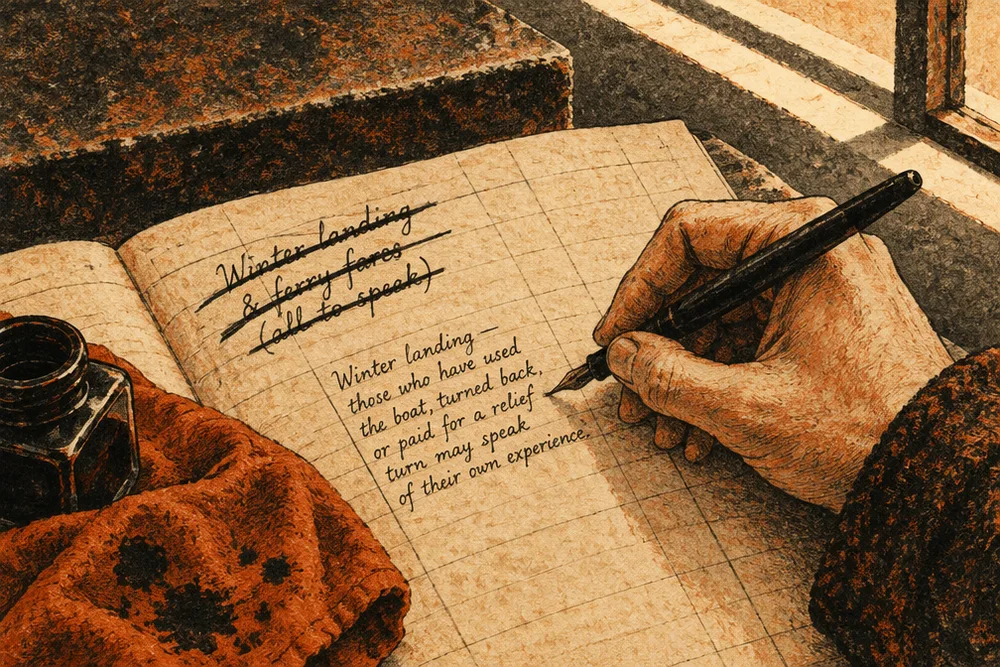
On the way down the market stair, Fanny met a woman carrying a pail who stopped to ask whether the hearing would be about the proposed landing or the ferry fares. Fanny explained that the council was considering a winter landing, and that anyone who had used the boat, turned back, or paid for a relief turn could choose to speak about their own experience.
“And will you be writing it down?” the woman asked.
“Only if you agree. And you can tell me not to quote you.”
The woman studied Fanny’s ink-dark cuffs. “You’re the clerk.”
“Yes.”
“Then you’ll write something.”
“I’ll write what you permit me to write. If you don’t want me to write anything, I won’t.”
The woman looked toward the stair above them, then down at her pail. “I’ll think on it.” She continued down without giving her name.
Fanny did not call after her. It was a small exchange, and nothing had been secured by it. But she understood that explaining the rule did not erase the weight of her position. She held the pen, and she kept the official ledger. People might doubt that she could put either down when asked.
Back at Salt Step, the office was quiet. She placed the consent sheet in the drawer, not the ledger, and shut it. A paper kept out of the official book was not secret forever; it was only in a different place for now. She would have to be careful about who saw it and why.
The after-hours line in the day’s account remained empty. Fanny did not like the look of that blank. It resembled the old answer she had been trying to overcome: no entry, therefore no journey. But the line had been made for fares entered at the hatch, not for every burden carried across the creek. She could not make it mean more simply because the district needed a case.
She turned the ledger to the next day and squared it to the table. In the margin, beside the column for official crossings, she wrote a small note: “Scheduled fares only.” Then she stopped. Even that note might be mistaken for an explanation of the hidden journeys. She crossed it out and wrote instead: “This book records scheduled fares.”
The distinction was narrow, but it belonged to what she could verify. She let the sentence stand.