The Bell Was Not Carried
Page 3 of 257
Chapters
“If I ask them to build a winter landing,” Fanny said, “they’ll want to know who would use it.”
Nell tucked the envelope away. “Then ask them to watch the women walk the hill.”
“They’ll say the hill is a road.”
“It is a road,” Nell said. “It’s also the reason I had one stocking left wet.” She lifted the other leg of her skirt to show the muddy edge. “Don’t make it sound as if I’m asking them to carry me because I’m your sister. I’m asking them to stop charging women for a tide they can’t command.”
Fanny pressed her lips together. Nell had a way of correcting the sentence before it was fully spoken. She could hear in it the petition she had been drafting: a winter landing, safe steps, access at the hours the cannery used. She had meant to make the case for a public improvement. She had not meant to make Nell the case.
“I haven’t written your name,” Fanny said.
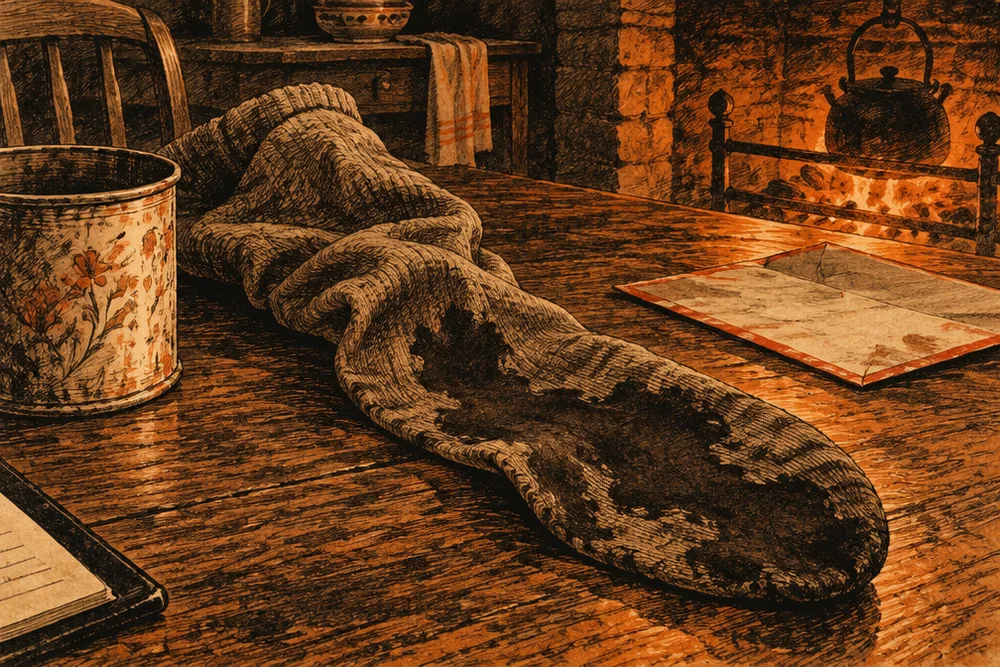
“Good. And don’t write the others’ names either unless they tell you to.” Nell took the stocking from the chair back and held it toward the stove. “Some of them can lose a day’s pay and still be in trouble. Some can’t afford even that.”
The small bell sounded once more across the creek. Nell turned her head toward the window, then back to Fanny. Neither of them spoke until the note had faded.
“Was that the east bell?” Nell asked.
“I thought it was.”
“You thought, or you saw?”
Fanny looked toward the hatch, where the east bell’s pull ended in a loop of rope. “I saw the bracket empty from upstairs.”
Nell gave a short nod. “Then somebody’s crossed.” She set the stocking down. “That’s not the same as saying I could have crossed.”
The distinction landed harder than the note. A crossing after the official day closed did not prove that the boat could safely or regularly take a worker before the morning whistle. It proved that a person had crossed once, under circumstances Fanny did not know. It might have been an emergency, an agreement between neighbours, or a fare paid in some other way.
Fanny opened the ledger again. The page had the usual columns: hour, passage, fare. Each scheduled sailing had its proper stroke of ink. No space on the page asked about a woman who turned back, or a boat that went when the office was shut.
“I can take your envelope to the surveyor,” Fanny said. “Not your name. The docking.”