The Bell Was Not Carried
Page 29 of 257
Chapters
“A number made from what?” Temperance replied. She bent her knees loosely as she leaned over the table. “Half bundles, half turns, fares that didn’t cover a man’s time. If you take the book away, someone looking at it can make a list whether you intend it or not.”
Fanny set the official ledger down, but did not open it. She had been taught that a book was useful because someone else could check it. She had not been taught what to do when checking meant finding a household in a date, or a private need in the space between two entries.
“Then I’ll work here,” she said. “You can keep the book.”
Martha’s broad nostrils flared, not quite a smile. “That is nearer.”
Temperance loosened the stained tie. “No copying names. No carrying out a page. If you see a mark you cannot make sense of, ask me before you write anything.”
“Agreed.”
“And if I tell you a mark is not yours to count?”
Fanny hesitated. The count was for a public request, and public requests required something more than trust. “I’ll ask what can be counted instead.”
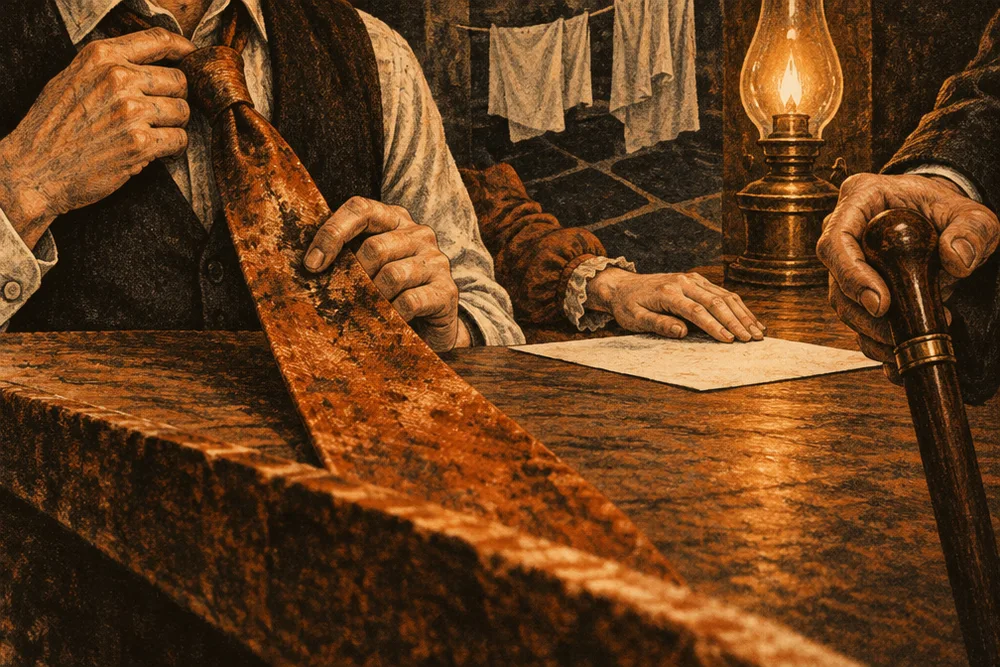
Temperance gave a short nod. It was not a welcome, exactly, but it was permission to sit down. Fanny took the chair nearest the table’s end. She lined up her blank count sheet with its edge, then caught herself and left it a little crooked. For the first time since she had entered, she saw the difference between arriving to help and arriving to take charge.
The first entries seemed ordinary enough. Beside a date, a small mark like a folded corner; beside another, two strokes and a word abbreviated to “wash.” Temperance explained that a bundle was the agreed measure for a relief turn, not necessarily a parcel of linen. The first half meant a passenger carried one way; the other half meant a return, or another passenger on a separate trip, depending on the mark beside it.
“That makes it a poor measure,” Fanny said.
“It was a measure for paying men,” Temperance replied. “Not for satisfying a clerk.”
Jory Penhale sat on an upturned crate by the door, his walking stick across his knees. His right hip rode high under his short pea coat. “It was a good measure when I got paid by it.”
“You were paid when there was money,” Temperance said. “That is what I’m trying to find out.”
Jory rubbed his thumb along the stick’s polished handle. “Then count what I rowed, not what the river owes.”