The Bell Was Not Carried
Page 238 of 257
Chapters
They met in the Salt Step Office, where Fanny laid the official book to one side and squared a clean sheet in the middle of the table. The women discussed the closure, the work band, and the difference between a turn that could be safely sailed and one that could not. They did not agree that the cannery should pay wages through every closure. They agreed that a woman who arrived within the band should not be treated as careless simply because the creek was impassable.
“If we say it plain,” one forewoman said, “they’ll hear ‘pay us for staying home.’”
“Then say what happened,” Nell replied. “The boat shut. We came by the lane. The shift band has to account for both.”
Ada had sent no written decision yet. She had agreed to review the records and take the question to the wage office; that was less than a guarantee and more than she had offered the first time. Nell accepted the difference without calling it victory.
Fanny noted the day’s boat closure in the service column. She wrote no passenger names, because no passengers had crossed on that turn. Beside the closure she recorded the reason given by Temperance and the time the notice had been posted. That was the information needed to assess the rota and answer a complaint about the service.
“It looks severe,” Nell said, reading the line.
“It is a service record,” Fanny replied. “It doesn’t say who lost an hour.”
“Good. That is the part we must say ourselves.” Nell gathered the forewomen’s paper. The record would show what the boat had done and what it had cost to staff. The women would speak for the wages, if they chose. Fanny had begun to understand that keeping a name out of one book did not mean keeping a person out of the argument.
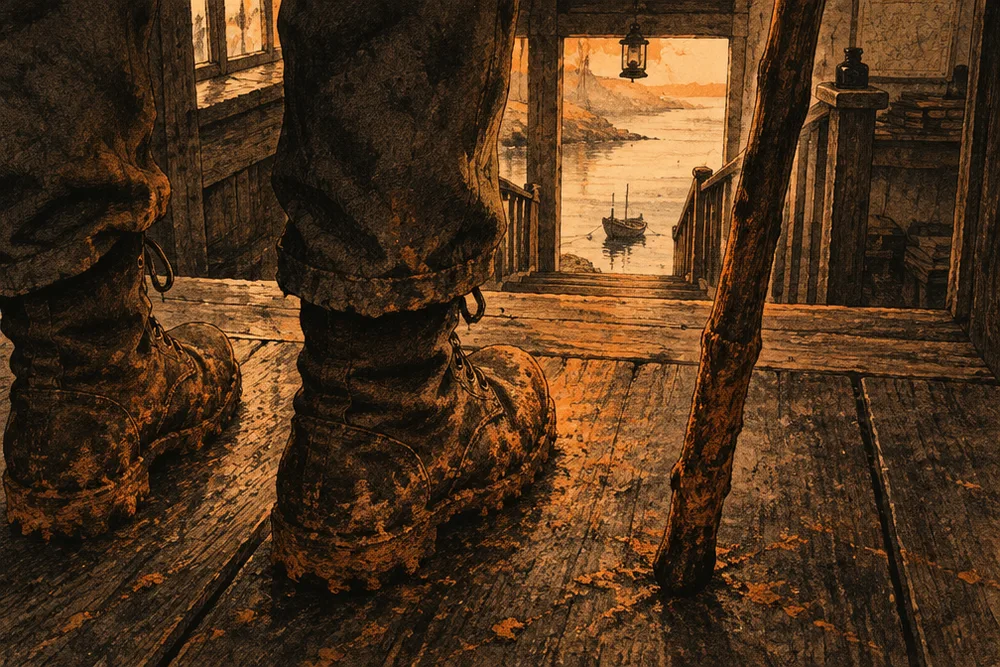
On the first afternoon Jory Penhale took the relief, Fanny carried the ticket book to the Cut herself. It was no bigger than her hand, and she had filled her jacket pocket with pennies for change. The pennies clicked as she went down. Jory, sitting on the second tread from the bottom, lifted his stick to let her pass.
“You’ll have to go back up,” he said. “You’re between me and the lane.”
She stepped aside. From where he sat he could see the top of the stair through the rails, but not if she stood in the turn of it. He had laid a scrap of sacking under himself and set his stick where he could reach it without getting up. The boat was ready below. At the old steps there would have been mud over the toes of his boots by now.