The Bell Was Not Carried
Page 196 of 257
Chapters
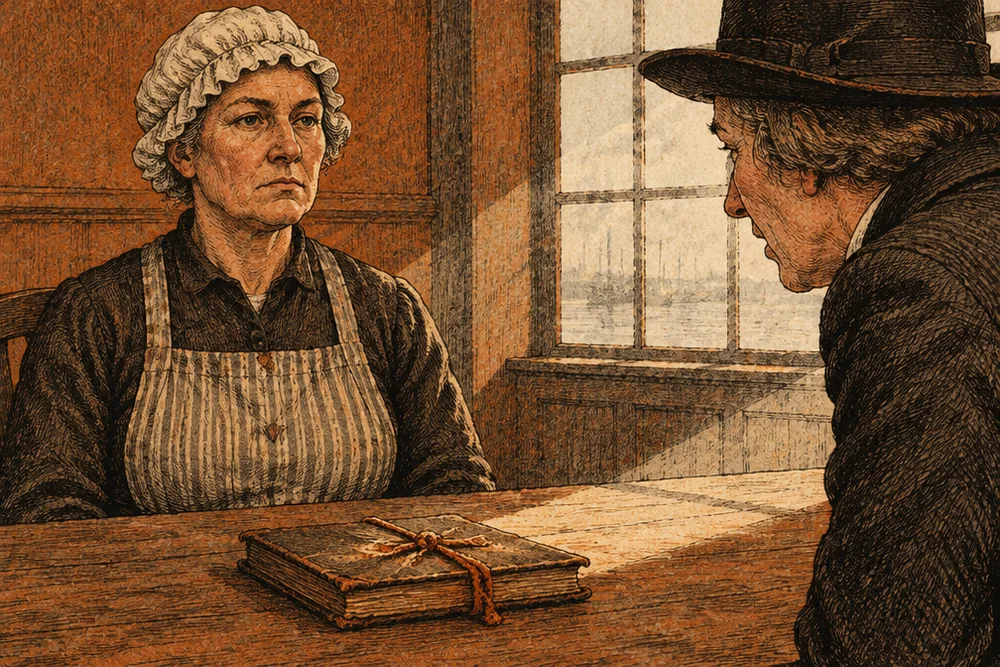
Martha gave a short, humourless breath. “Material is what keeps a boat moving. A passenger pays a fare, if they can and if it is right to ask. Sometimes they cannot. Sometimes asking would make a bad matter worse. A boat still needs a hand on the oar, and a relief man still has to be paid.”
“You are telling us fares were waived?”
“I am telling you a fare was not always the only money in a crossing.”
“How did you reckon what the fund had paid for?” the chair asked.
“Laundry bundles. Half bundles. A mark against the laundry money when that money paid for a turn. We did not write who was in the boat. The person taking a fare might know; the book did not need to.”
A ratepayer shifted on the bench. “And when the laundry money wouldn’t meet it?”
“It stayed owing,” Martha replied. “A mark isn’t the same as money in a man’s hand.”
The room moved with small sounds: a boot scraping, a cough swallowed, the clerk’s nib touching paper. Temperance had waited on enough reckonings to know the difference. A turn could be finished and the boat tied up, and the work would still be owing to the man who had done it.
“Was the relief hand owed less if no fare came in?” the chair asked.
Martha looked at him with the patience of someone who had explained washing to people who believed clean linen came from nowhere. “He was owed for coming and doing the work. What we had to pay him with was another question.”
The chair’s mouth tightened. “The district would have to know what it was undertaking before it put a boat out.”
“So would the man in the boat,” said Martha. “Set down what he’s to be paid before you tell him when he’s wanted.”
Temperance felt her own shoulders draw up beneath the coat. She had wanted relief crews paid without becoming the keeper of every secret they carried. Now Martha had put the problem plainly enough that the room might mistake plainness for insolence. Temperance let the silence stand. If she hurried to protect Martha, she would make it seem they had a shared account to defend rather than a boundary to keep.
A woman on the public benches leaned forward. “Then what do you ask us to take from the old account?”