The Bell Was Not Carried
Page 137 of 257
Chapters
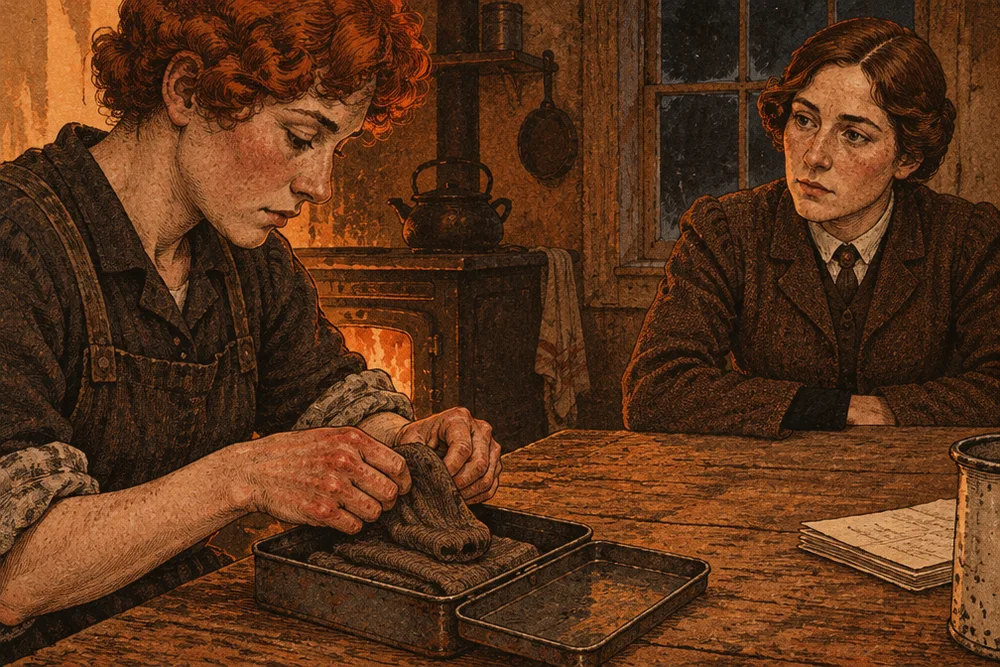
Fanny looked at her sister’s hands, red at the knuckles from work and washing. She had wanted the petition to bring Nell dry to the cannery, had wanted to hand Elias a clean set of figures, had wanted the hearing to see the necessity without making anybody explain the private reason for a late passage. She had been trying to keep every difficulty in a separate column. The people would not stay there.
“I’ll ask again,” she said. “But I won’t write a yes until they tell me what they’re agreeing to.”
“And don’t tell them it’s private if you can’t promise that.”
“I can promise I won’t give the names.”
“Someone can still guess.” Nell turned one stocking right side out. “If I talk about being docked for arriving late, folk will know it’s me.”
“You might choose to speak anyway.”
“I might.” Nell drew the stocking over her knee, checking its heel. “But it’ll be my choice, not because I signed a slip on a Tuesday.”
Fanny nodded. The rule had become more exact, and therefore harder: attendance was not permission to quote; permission to quote was not permission to identify a date; and no assurance of privacy could erase what listeners might infer.
Nell put the stocking in her tin. “You’ll need people who can speak without giving away someone else.”
“I’ll ask them that.”
“And listen when they answer.”
The following afternoon, Fanny took the remaining slips to their owners. She did not carry the petition folder. She carried only the envelope, and she did not open it on a doorstep unless the person asked to see what was inside. Some wanted their paper back. One told her to destroy it. Another said she might come to the hearing but would not speak. Fanny made no mark beside any of their names.
At the Salt Step hatch, she found a woman waiting to ask about the hearing. The woman’s eyes went first to Fanny’s hands. “Are you writing down who comes?”
“No.” Fanny pulled the clean attendance sheet from beneath the ledger. It was blank. “I’m not taking a list of spectators.”
“And if I speak?”
“You can tell me what I may repeat. You can also say nothing for the record.”
The woman studied her face as if looking for a hidden line of ink. “That’s not how councils work.”
“It may not be. But I can tell the chair what I’ve promised.”