The Bell Rings Inland
Page 85 of 227
Chapters
“If there is a rest. If I decide it’s appropriate. If the wax can take it.”
“I’m not asking you to put it on the school bulletin.”
Nessa’s gaze stayed steady. “You don’t have to ask. You’ve already seen what happens when people decide a voice belongs to everyone because it matters to them.”
Quinn remembered the clip Idris had sent out. The nickname in it, the way people had recognized Nessa before she chose to give her account. Idris had admitted his breach, but the apology had not put Nessa’s privacy back where it had been.
“I know,” Quinn said.
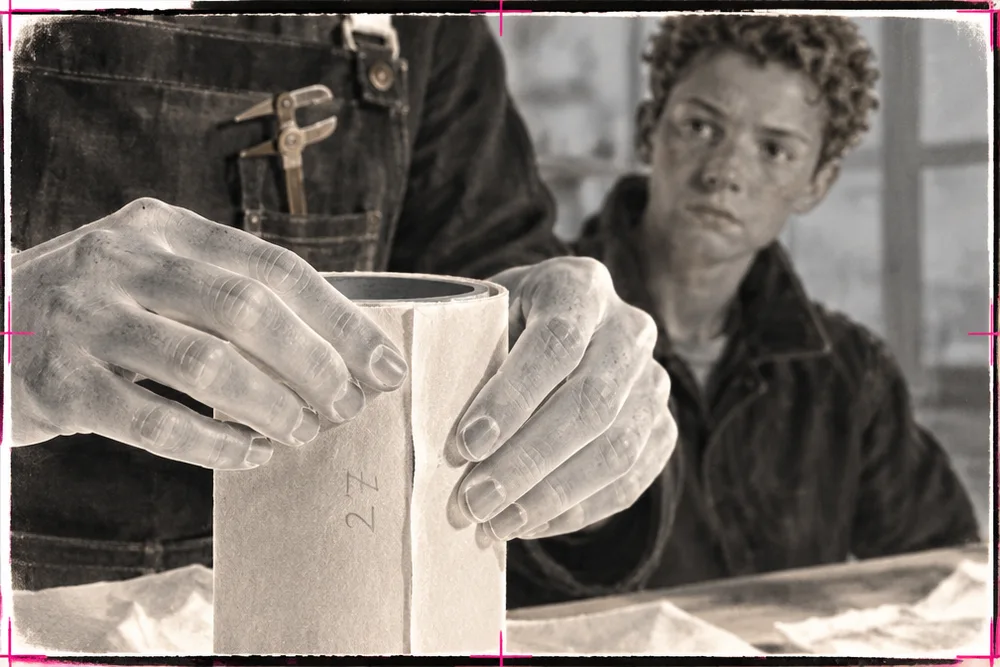
“Do you?” Nessa fitted the jacket around the cylinder. “Your father’s voice is not yours to spend. Neither is mine.”
“I didn’t say it was.”
“No. You didn’t.” Nessa’s expression softened by only a fraction. “But you came here wanting it to prove something.”
Quinn had. She had wanted proof he had fought the omission, or that he had hated it, or that he had carried the altered tally under threat and then spent the rest of his life trying to make amends. Instead, the voice gave her a bargain. It offered no explanation for what he had become afterward.
“I wanted to know who he was,” she said.
“You heard one thing he did.” Nessa closed the jacket. “That is not the whole of him. It’s not nothing, either.”
Mara’s hand rested on the table beside the photograph. “I should have told you.”
“Yes.”
“I’m sorry.”
Quinn could not decide whether the apology made her more angry or less. She looked at the jacket, its pencilled number and thin paper seam. There were limits around it now: what could be heard, by whom, and what could be made from it. The limits seemed necessary. They also left her with no simple version to carry home.
Mara drove them home without turning on the radio. The minibus rota rode on the passenger seat, held down by a tin of coins. Quinn sat with the photograph envelope in her lap. Its corners pressed lightly into her knees each time the van went over a seam in the road.
At the flats by Tin Court, lights glowed in the upper windows. A bus waited at the turnaround, its engine idling while two passengers hurried across the wet pavement. One carried a child asleep against a shoulder. Mara watched until they were aboard, then pulled away.
“He kept the bus,” Mara said. “Not forever. Not for everyone. But there were years when it mattered.”