The Bell Rings Inland
Page 115 of 227
Chapters
She set the card back on the counter but didn’t leave her name there as permission. In the corridor, the office lights hummed above the empty locker row. The pink loop at her hip knocked once against the folder as she walked away.
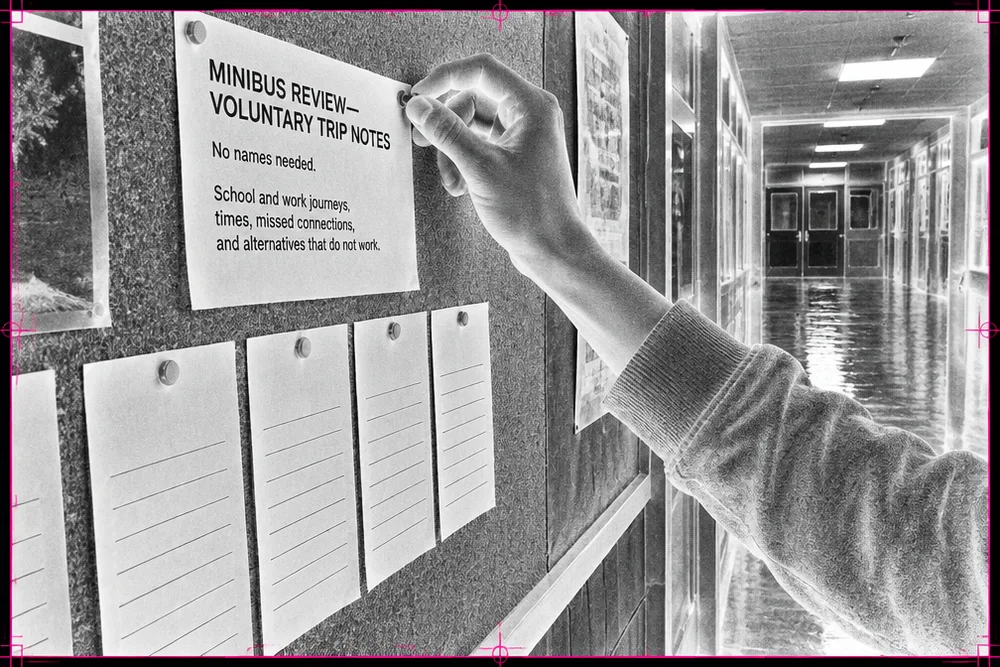
The next morning, Quinn stood before C Corridor’s noticeboard with a fresh sheet of paper and a roll of tape. A few students slowed as she smoothed the page flat. It read: MINIBUS REVIEW—VOLUNTARY TRIP NOTES. No names needed. School and work journeys, times, missed connections, and alternatives that do not work.
She had not written that the route would be saved. She had not written that anyone should be grateful for a bus that arrived when it could. Under the heading she had added where to leave a note and whom to ask about the review. She had checked every word with Mara the night before, not to borrow her authority, but to make sure the questions could be answered without promising an outcome.
Mr. Hales appeared at the far end of the corridor. “The walk invitation is going up at lunch,” he said.
“Is the key procedure changed?”
“The office is discussing it.”
“Then I haven’t agreed to lead.”
He nodded, less impatient than yesterday. “I’ll tell them.”
Quinn stepped back from the notice and watched a first-year read it. The pupil’s finger paused at no names needed. Then she took a blank slip from the tray beneath the board and folded it into her pocket.
Across the corridor, the display card waited on the office counter. Quinn’s name was still printed on it, a promise made by somebody else. In the Tally Room, the old declaration remained in a folder: no dependent households. In the cabinet, the route map showed the places where the minibus went, without saying who needed it or why.
The invitation to lead the walk would appear with her name on it. Quinn could feel the school moving toward that decision, toward the familiar shape of a pupil standing at the pier and making the rite look harmless. A private bargain might buy an extension, but there was no paper saying so, and nothing in it that would keep the route from becoming temporary again.
She tore off a clean strip of tape and pressed down the notice’s curled lower corner. Then she left the space beneath it clear for answers. The question was no longer only whether the bus mattered. It was what kind of evidence could show that without making the riders surrender more than they chose.