The Bell Rang Underwater
Page 239 of 266
Chapters
Kerris arrived without Bram. She had not told him the time or place, and she had not asked Avelin to do it for her. The inquiry’s findings had reached the family after they confirmed the identification. They had written back with a date and a request: no speeches from officials, no photographs, no strangers asking them to tell the story again.
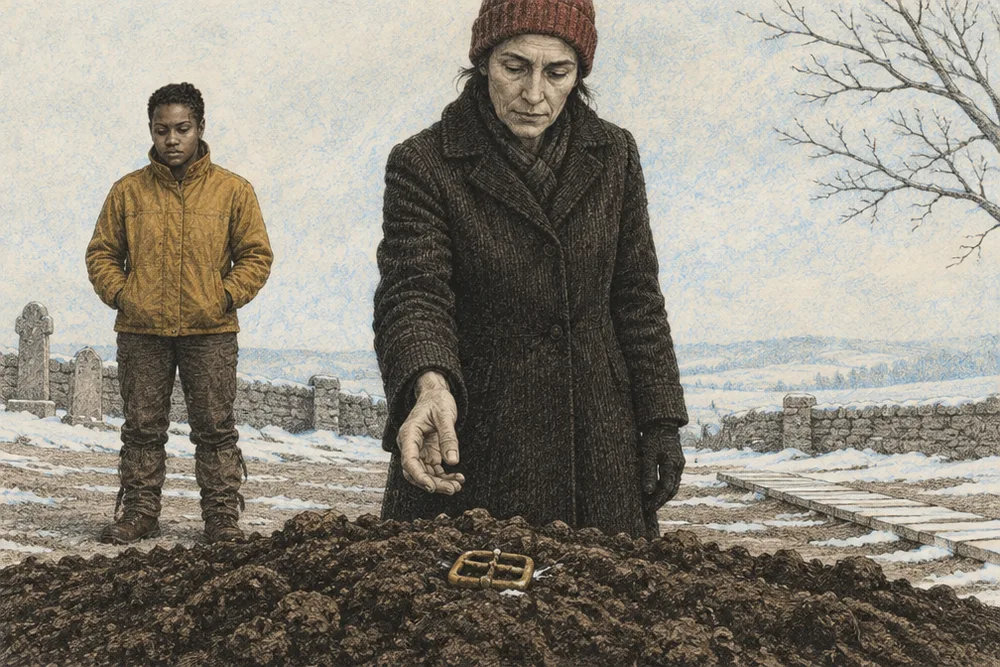
The identified passenger’s sister stood near the front, a woman with a red wool hat pulled low over her ears. Her hands were bare despite the cold. When Kerris introduced herself, the woman nodded, then looked past her toward the church door.
“He’s not here,” Kerris said.
“Your father?”
“No.”
The woman lowered her gaze to the ground. “I thought he might come.”
Kerris had no answer that could make the absence useful. “He wasn’t invited.”
“Good.” The woman drew one glove from her coat pocket and put it on, finger by finger. “I don’t want him explaining what he thought he was doing.”
“He has given an account to the inquiry.”
“That’s for them. This is for my brother.”
The words landed without anger, which made them harder to deflect. Kerris stepped aside to let the woman’s family gather close to the grave. She did not try to make herself a bridge between them and Bram. If he wanted to answer for what he had done, he could do it in the place where answers were required, not at a grave where his presence might look like a claim.
Avelin arrived with the final corrected name folded in her pocket. Jory came later, moving carefully on the leg that had never quite recovered from the mud crossing. He stood at the rear, hat in both hands. Neither spoke. The service began with a few plain words from the minister, then a silence long enough for the wind to move through the bare branches.
The box was lowered with ropes. The family watched until it came to rest, and the gravedigger began to lay earth over it. The first clods struck the lid softly. Kerris heard the sound and thought of the old landing bell, of metal muffled under silt, and of the brief, sharp blows that had once been used to call a boat through fog.
The sister stepped forward after the others had moved back. She placed a small brass buckle on the mound, its leather strap cut away. “He wore this when he left,” she said. “We kept it in a drawer because we didn’t know what else to do with it.”