The Bell for Unlisted Places
Page 30 of 304
Chapters
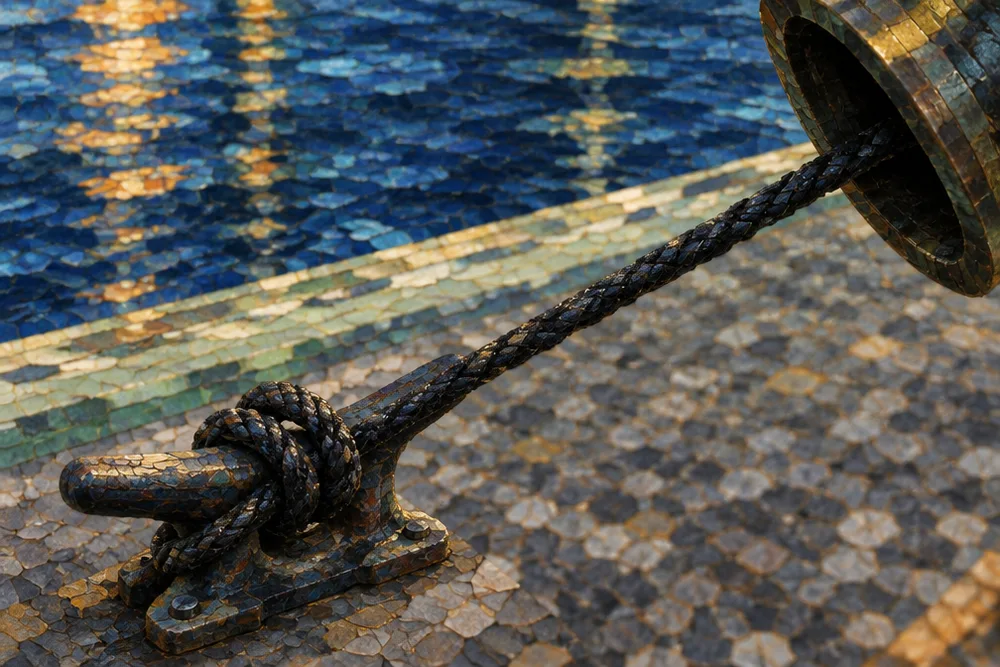
She climbed to the platform, measured the frame, checked its bolts, and noted the green corrosion. She wrote the bell’s diameter, the length of its clapper, the depth of the tide around the stair. Iven watched her make the measurements. She did not look at the bell as if it were a marvel. She treated it as a tool that might have been neglected, and that steadiness seemed more dangerous than wonder.
When she finished, she tapped the frame with a pencil. The sound was a dry little tick.
“No tone,” she said.
“The clapper is tied back.”
A length of tarred cord ran from the clapper to a cleat. Ylva followed it with her eyes, then leaned closer to the tag. “That’s deliberate.”
“Yes.”
“You’ve heard it before?”
“No.”
She studied his face. “You said the old routes heard the bell.”
“I said people remember hearing one.”
“That’s not the same.”
“No.”
She marked the cord and its knot in the log. The harbor office’s instructions had not asked her to test the bell; they had asked for an inventory. The distinction mattered. Iven had once watched distinctions like that become the narrow ledge on which a whole household stood.
Ylva stepped down to the skiff. “We go to the breakwater first. If the approach is marked, we sound the water. If it isn’t, we don’t improvise.”
“Understood.”
She pushed off. As the skiff swung away, the bell’s dark shape remained above them, silent against the pale dawn. Iven looked back once, then kept his eyes on the channel.
The channel narrowed beside the second beacon. Ylva eased the skiff through a gap between two stone shoulders, taking care not to scrape the hull. Beyond the beacon, the breakwater’s outer face rose in a long curve, hiding the water on its lee side. Iven pointed with two fingers.
“There,” he said. “The old entrance sat below that seam.”
“There’s no opening.”
“Not now.”
She turned the skiff broadside to the wall and let the tide carry them along. The water was lapis-dark, its surface folded into small facets by the morning breeze. Iven recognized the shape of the harbor beneath the new marks: the old channel had run along this curve, then opened toward a ledge where boats could wait without taking the main basin’s room.
“Sounding pole,” Ylva said.
He passed it forward. She lowered the pole beside the hull. The first mark came up wet at five fathoms. The next at four. The third struck something with a hollow knock, though the chart showed nothing but a blank patch of water.