The Bell for Unlisted Places
Chapter 23 · What the Water Kept
Page 227 of 304
Chapters
By dawn the surge had let go of the harbor, though it had not returned anything in the same place. Water withdrew from the streets behind Sella Brinwick’s bakery in slow, shining sheets, carrying flour, reed baskets, and a child’s red wooden horse toward the mouth of the passage. Ylva Tern stood on the ferry deck with one hand on the rail and the other around the bell’s cold handle. The bell had not rung since the rescue calls of the night before. Its bronze mouth pointed down, catching rainwater.
“We’ll take the families first,” she called. The words went across the quay to the two boats waiting nose to nose in the common refuge lane. Their crews had spent the dark hours sharing blankets and rope. Now they watched the waterline, where floating doors knocked softly against the masonry. “Only those who want to go. No freight until everyone’s had a chance.”
A woman in a soaked green shawl lifted her hand from the bakery threshold. “I want to get my mother to the hill. She’s had enough of sleeping on sacks.” Behind her, two men held a narrow chair above the mud. The old woman in it clutched a tin cup and kept her eyes shut. Ylva nodded to Iven Drail, braced at the bow in his plum reefer, and he stepped onto the slippery stones to guide them aboard.
The woman glanced past him at the flooded passage. “We may come back.”
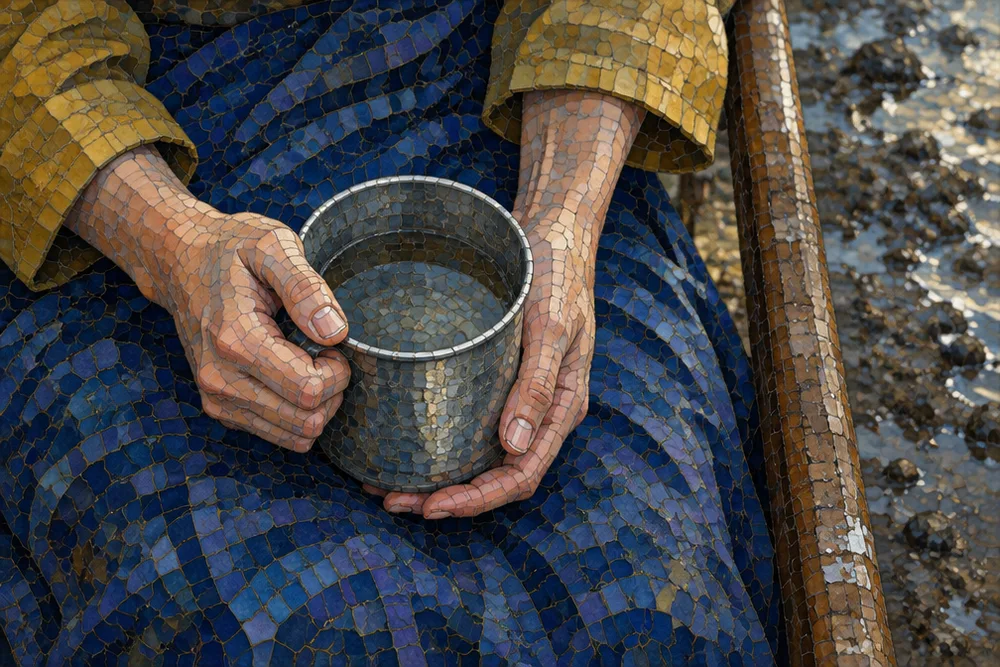
“Then we’ll bring you back,” Ylva said. She did not offer a timetable. It seemed important, suddenly, not to make a promise that sounded like ownership. Their boat backed from the broken line of buildings. Across the bowl, the east clinic ramp showed above the water, its pale stone edge glimmering under the washed-out morning.
By midmorning the boats had made three crossings. One family chose the hill; another asked to be left at the west bakery landing, where Sella had set out hot water and a plank over the deepest mud. A pair of brothers took their mother to a cousin’s house and returned alone. They stood on the deck afterward, looking toward the passage as if it might call them back. Ylva kept the bell quiet and let them decide.
There were no clean departures. Every landing demanded a line, a hand, a careful turn between floating timber and the current. When the little ferry nosed toward the outer breakwater, they found the old quay by its beacon first: a carnelian nub of light still burning in the damp. The chart had erased the stop years ago, but the people who had lived there had called it in during the storm, and its approach had returned for a tide.