The Bell for Unlisted Places
Page 280 of 304
Chapters
Maret looked at Iven. “You’ll explain this to the crews. They’ll ask whether an invitation is another way for the office to make them responsible for unplanned work.” “It is work,” he said. “So it belongs in the hours, and the pool pays for it. The household does not have to buy a full charter just to reach the clinic or collect a parcel.” He had promised no forgiveness to anyone in that doorway. This was something else: a way not to repeat the old bargain.
Maret asked him to make the first crew briefing. Iven almost refused. His old license had been useful during the days Ylva could not command, but he had never been good at speaking to a room full of people he had once disappointed. “I’ll go,” he said. The agreement would be worth little if it lived only in the superintendent’s handwriting.
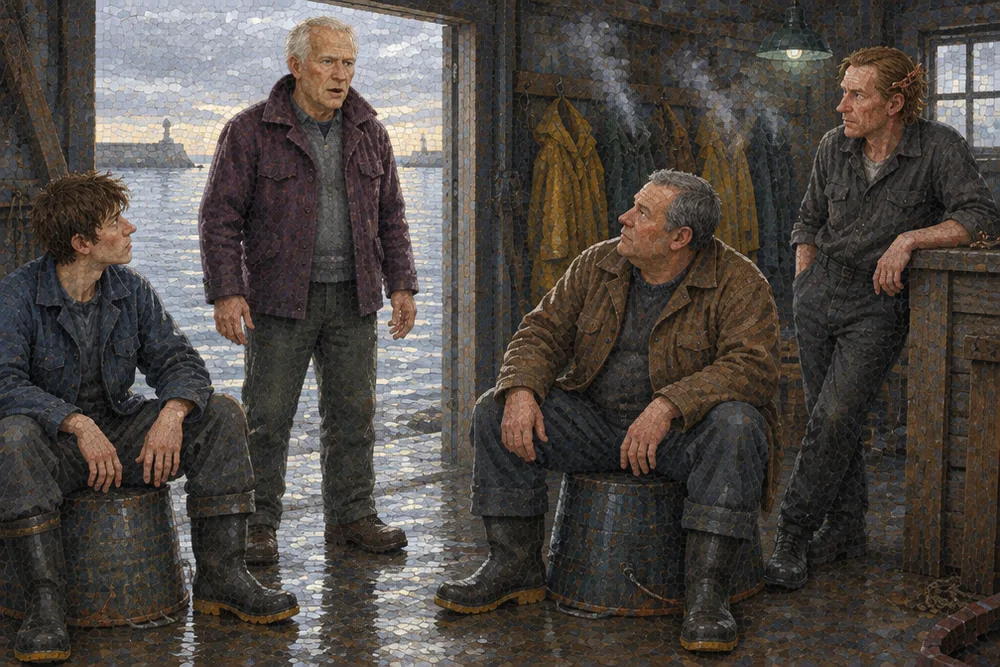
The crews gathered in the pontoon shed after the afternoon tide turned. Wet coats steamed on hooks. A repairer with a copper clamp still in his hair leaned against a crate; two deckhands sat on an overturned bucket, boots planted apart. Iven stood near the open doors, where the water’s gray light reached the floor. He told them one household had declined a regular call. He told them the household could still request an essential crossing, with permission, and that the request would be logged and paid as work.
“So we go when they whistle?” someone asked. “Only when they invite us,” Iven said. “And only when there’s safe room.” “And if the office says their place isn’t on the chart?” “The chart doesn’t make a home. It makes an approach.” He heard his own answer as a correction to the younger man, but also to the version of himself that had signed the old papers. “We don’t ring a door just because we can.”
The repairer asked how a resident would invite a trip if no boat stopped there. Ylva showed the blue ticket, its small square stamped with the dispatch mark. A resident could give it to a neighbor or bring it to the office; they could also send a spoken request through a named messenger, who would make the call without summoning the landing until dispatch confirmed a slot. The detail mattered. Everyone in the shed had once been told that a route was simple because someone else had omitted the difficult part.