Supper Before the Footbridge
Page 92 of 204
Chapters
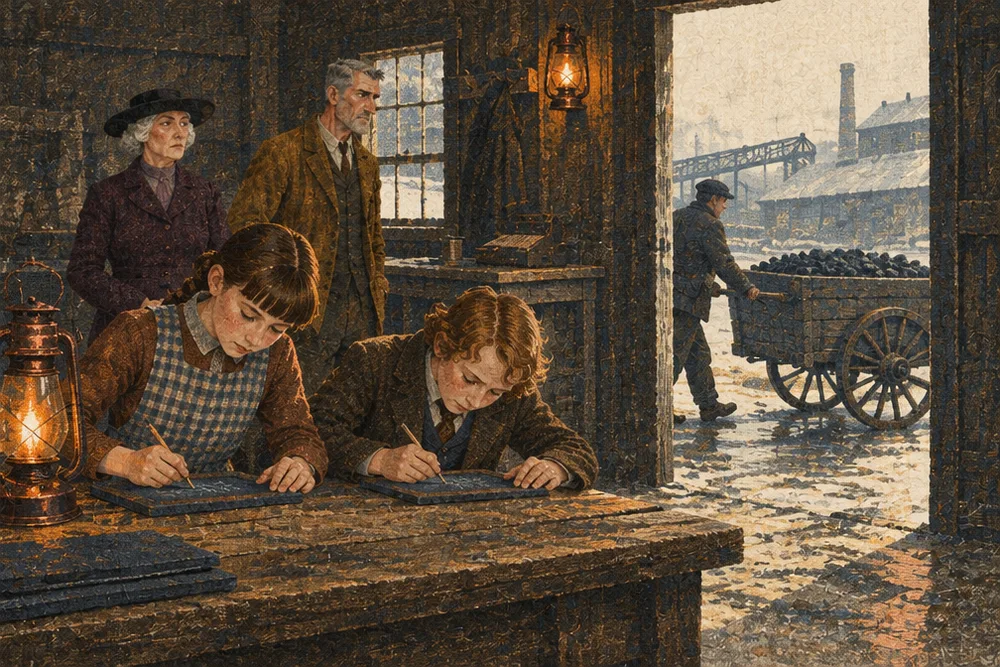
The children arrived in ones and twos, each carrying some remnant of the shift: lint clinging to a sleeve, a damp cuff, the sharp, sweet smell of oil. They were younger than Nell, mostly, and looked first at Catrin and then at the basket, as if the lesson might contain something to eat. She gave each a slate and wrote a column of sums on the board nailed above the pay table. A boy with a split thumbnail began to copy them. Nell stood by the door, listening for the foreman’s call.
Catrin kept her voice low. The shed was not a schoolroom; it had no benches, only packing crates turned on their sides. Still, she made them read a short passage aloud, then set them to adding figures. Two children were quick with sums and slow with letters. Nell was slow with both, but when Catrin asked her to describe the route from her cottage to the ferry landing, she marked the bends and ruts exactly, naming the places where floodwater had hidden the edges of the lane.
“You know it better than any map,” Catrin told her.
“I know where the mud takes your shoe.” Nell leaned her weight onto one hip. “And where the mill cart comes round.”
At the end of the hour, Catrin entered the names in the attendance book. She made no mark for the two who had gone back to the yard before the lesson was finished. Their time belonged first to the mill, and she would not pretend otherwise by writing a full day beside their names.
A handcart rattled past the shed. Nell looked up. “That’s the last of the bobbins.”
“Do you come to school on other days?”
“When there’s no shift.” She picked at the chalk dust on her thumb. “This week there’s a late one tomorrow. Friday they want us before the school bell.”
Catrin’s pen halted above the page. “You’re twelve.”
“They say I’m old enough to earn.”
Catrin heard the answer she had been fearing in the weeks since the ferry service resumed. The children on the east bank were not merely missing lessons because the river was wide or the crossing expensive. They were being folded into the hours that made the crossing matter less and less. If a child had to be at the mill when school opened, a bridge alone could not give her the morning back. But without a crossing, even the hours she might have had were lost to the six-mile road.