Supper Before the Footbridge
Page 89 of 204
Chapters
When they stepped ashore, Nell held out the note. It said the school could not promise a regular crossing or pay for one from its present purse. Catrin asked whether the ferry’s hours might be altered to match the mill shifts. Fenella read the lines twice. The request was fair, but the mill bell did not sound at the same hour each day, and one late shift could erase the next morning’s lesson.
She sent back her answer in her own hand. The scheduled crossings would remain as posted. For a special school passage, the school should send a day’s notice and pay the attendance wage for the time required. If there was no money for that, the children might use the regular crossings when they could. Fenella wrote that she was sorry the hours did not serve all of them, but she did not promise to make them serve by standing unpaid at the landing.
Catrin’s reply came two days later: a brief thanks, without complaint. Nell crossed again on Monday, though her shift had taken most of the morning. She arrived at the schoolroom after the first lesson and stayed for the reading hour. Fenella watched the boat return empty, its wake closing behind it.
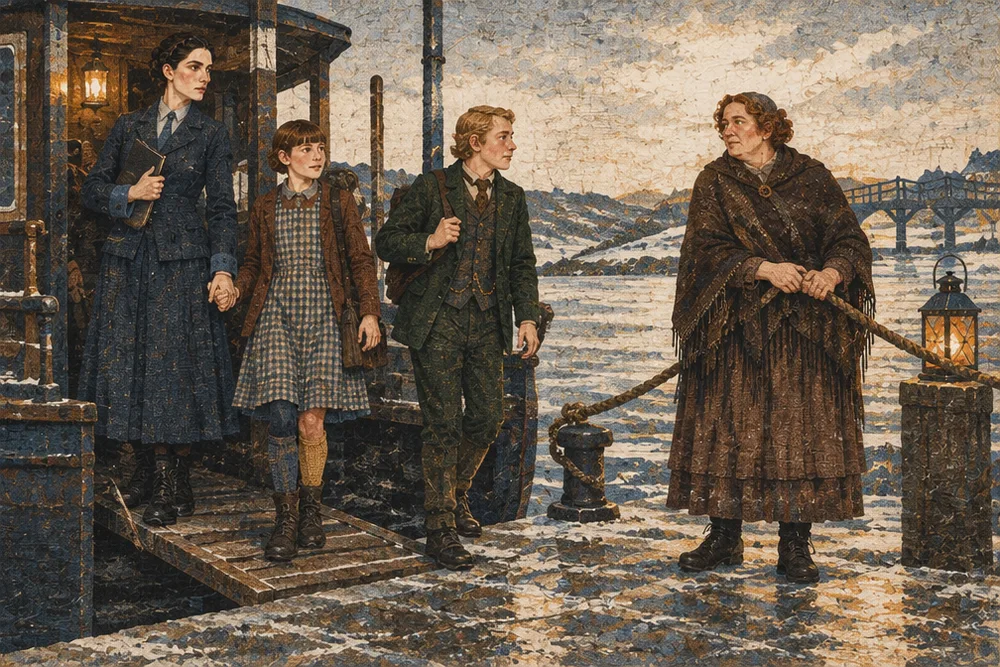
On Wednesday she saw Nell turn away from the landing at the wrong time and set off toward the six-mile road bridge. The girl’s checked pinafore vanished along the wet lane. Fenella tightened the knot on the noticeboard’s lower cord and went back to the boat. Its hours would keep; they would not make every journey possible.
By the end of the month, Fenella could name the regular passengers by the sound of their steps. The mill clerk’s heels struck sharply on the plank. The woman with the egg baskets came slowly, testing the boards with one foot. A cooper from upriver brought a dog that would not sit still. The ferry had become a service again, limited and legible, and she had learned to keep the ledger without confusing a full boat with a successful day.
On the first morning of a hard rain, the east-bank lane began to fill at its low bend. Fenella saw the water spread into the cart ruts and lap at the base of the pay-shed wall. She closed the ferry and wrote the word CLOSED on both boards. Edwin came down with his coat collar raised and watched her fix the notice. The warning bell at the schoolroom stairhead remained silent. No one needed to make the two signals answer for each other.