Supper Before the Footbridge
Page 191 of 204
Chapters
From the east bank Nell came walking back, her slate clasped under her arm. She had crossed for no purpose Catrin could see except to learn that she could. At the center she met a mill hand carrying an empty sack. Both shifted aside, and both passed without a word.
Nell reached the west end and ran up the school steps. The bell rang once for dismissal. Its note carried over the water and across the yard, but no one on the bridge mistook it for a warning. Catrin watched the school door close behind the girl, then turned to follow Agnes toward the parish room.
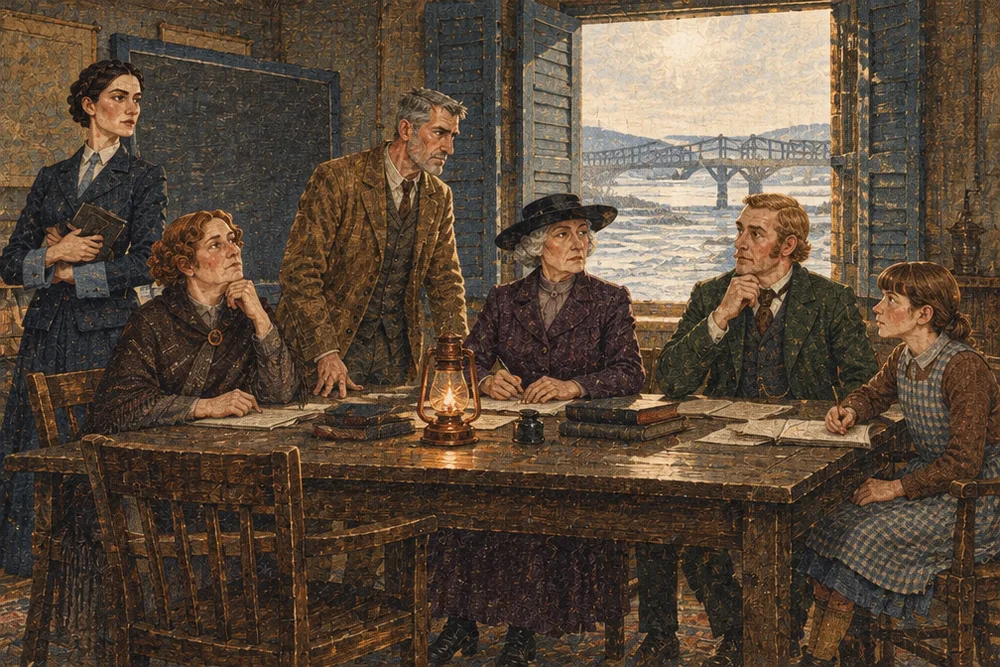
The following morning, the trustees met in the schoolroom to settle the first account of repairs. It was not a meeting Catrin had to attend, but she came early to sharpen the pencils and open the shutters. A list of names for the parish chest lay on the table, beside a small tin of spare nails left by the contractor.
Mr. Ballow complained that the east fence would need paint before the summer was out. One farmer said the parish should not pay for paint until it was required. The vicar reminded them that bare timber weathered whether or not a committee had approved it. They discussed the matter at greater length than the cost warranted, then agreed that the trustees would inspect the structure at the start of each quarter and authorize necessary repairs.
Agnes, who had remained to advise them, made no attempt to hurry the exchange. Catrin knew that patience could be a method of securing a decision, but she also knew it could consume the whole morning. When the trustees finally entered the inspection dates in the book, Agnes signed beneath them. The duty now had names and intervals, not simply a promise made while everyone admired the new boards.
At the end of the meeting, the vicar asked Catrin for the record of the inspection. She handed him the copy. He glanced over it, then looked toward the window where the bridge was visible between the schoolhouse and the quay.
“You did well to keep the accounts separate,” he said.
“Agnes required it.”
“She required it because she understood what it meant. You could have made the old hearing easier to bear by making it sound more certain.”
Catrin put the sharpened pencils into their box. “It would not have been true.”
The vicar’s expression softened. “That is not always the first thing a copyist is asked to consider.”
“It ought to be.”