Supper Before the Footbridge
Page 173 of 204
Chapters
“The bell is for warning,” she said. “Not for fares.”
“That has never been written down.”
“Then it ought to be.”
A gust came downriver and slapped the folded freight order against Ivo’s coat. He pressed it flat with his thumb. Fenella felt the lost booking in the weight of the moment, as if the flour and iron were still waiting on the other side of the path. She wanted to tell him that she was sorry. The words would not put the boat in safer water, so she kept them to herself.
“I’ll go to the yard,” he said. “Someone will need to turn the cart back.”
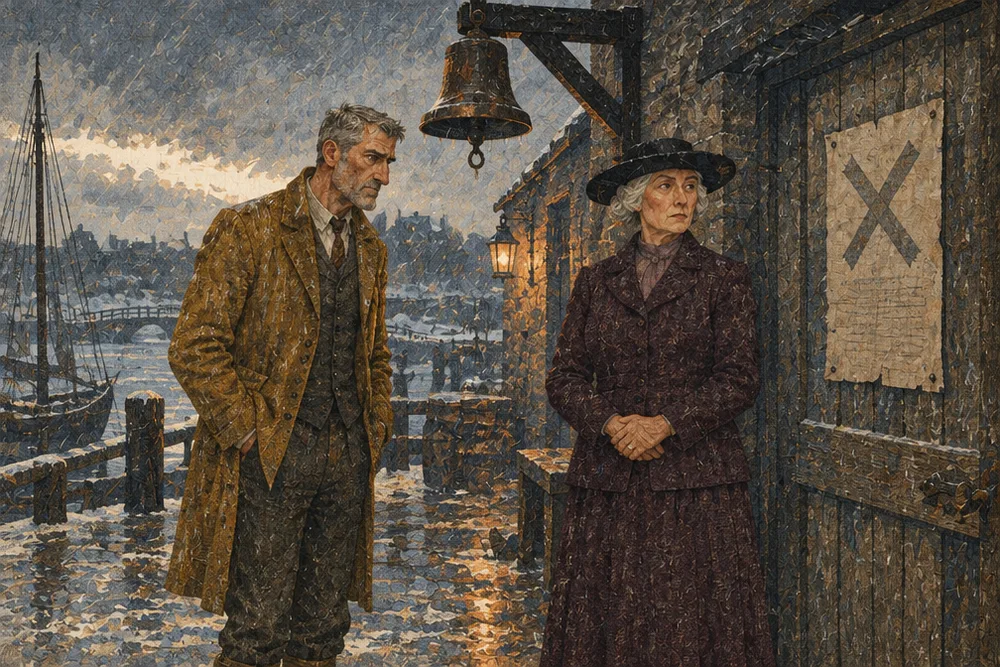
Fenella nodded. He went down the lane, shoulders stooped into the weather. The black letters on the board shone wet behind him.
Fenella could have stayed in the cottage and watched the tide through the window. Instead she took her oilskin cape from its peg, tied it beneath her chin, and went to the landing. The rope needed checking, and the flood had a way of bringing up loose branches that could batter the boat. She carried a boat hook, its shaft worn smooth where her husband’s hand had held it.
At the bottom step, the current curled around the mooring post. A length of willow had lodged against the ferry’s side. Fenella leaned out from the stones and worked the hook under it. The branch turned once, scraping along the gunwale, then slid away into the flood. She braced her boots against the wet landing and waited for the rope to draw tight before she moved again.
The ferry’s lantern bracket was empty. It had been empty since the hearing, when she had told the commissioners she put out the flame herself. People had carried that admission farther than they had carried the rest of her testimony. In the village, a fact could be repeated until it grew edges that were not there. She had extinguished the lantern because she wanted her husband to come home for supper. She had not said she saw him leave the landing afterward, nor that she knew what made him return.
The river slid past, carrying bits of straw and a pale chip of wood. Fenella set the hook against the wall and watched the rope. She could see the ferry’s bow rising, settling, rising again. There was no safe passage for a loaded cart, or even a passenger who might stumble when the boat shifted. Her choice was plain in the moment, though she knew the cost would be less plain when Edwin Prowse asked for his accounts.