Subtract Five Hours, Add Oyster Walls
Page 152 of 259
Chapters
The officer hesitated, then looked to Sabine. Sabine checked the drawing. “The mooring fittings will be accessible. The ramp will lift clear.”
Nessa leaned back. Her chair gave a sharp creak. “Then it’s a workable proposal.”
The oldest board member touched the report. “You’re certain the retired float cannot be made safe?”
“Certain enough not to put passengers on it.”
“That wasn’t my question.”
“It’s the answer that matters.”
The board members exchanged looks. Nessa waited. She had learned that silence could be a tool, not a space she had to fill. At last the oldest member signed the estimate and passed it along. The project was not approved for construction yet, but it was allowed to proceed to the next review. The sum remained small. The work ahead remained large.
Sabine gathered the signed papers. Her chart case made a dry rasp against the table. “I’ll mark the new shore approach tomorrow.”
“I’ll bring the boat,” Nessa said. “We’ll test the line from water, not just from a drawing.”
“That will take a tide window.”
“Then we’ll use one.”
The meeting broke up. The officer collected her calculator; the board members left their mugs behind. Nessa carried the recovered cleat out to the store shed. She set it on a shelf where it would stay dry, and wrote NEW BERTH across a card beneath it.
The old float, she knew, would go to a recycler when the yard made room. Its blue paint would peel under the weather. The sound pieces taken from it might hold a new structure together, but the hull itself had been refused. That mattered. A reused thing could be valuable without being made to serve past its limits.
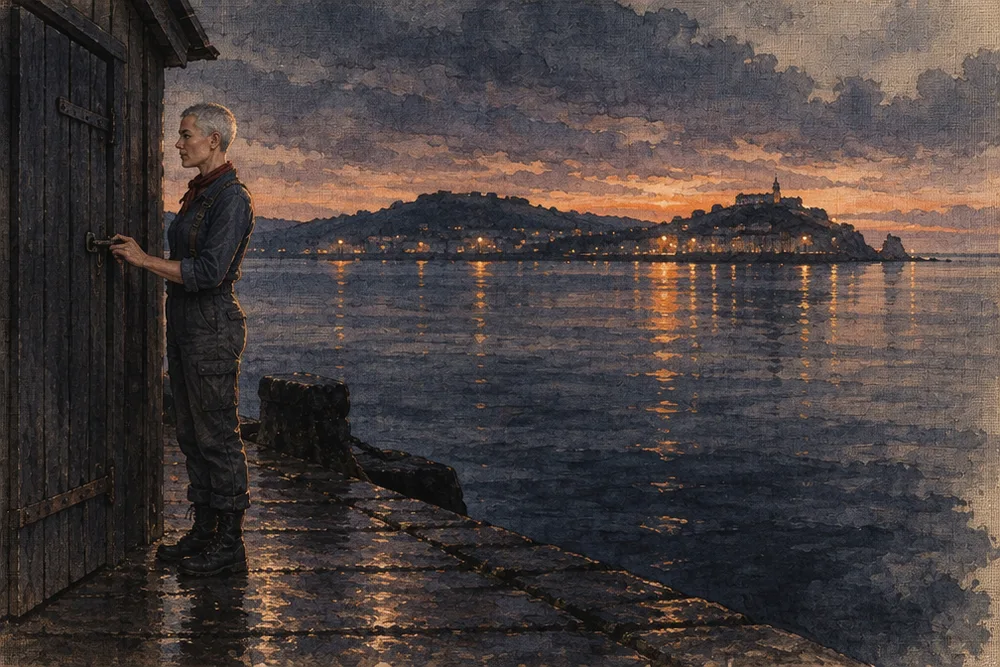
Nessa shut the shed door and tested the latch twice. Across the basin, Latch Island’s lights had come on one by one. The shore landing was invisible in the dark, and the channel’s depth could not be read by eye. She would wait for the next safe window, measure what the boat could reach, and build from that. The ferry would go when the landing was ready—not when the calendar wished it were.
She was up before the first ferry departure, though the committee had given no construction date. The habit of checking a vessel before dawn had outlived her need to command a full schedule. She walked the quay, tested the reserve boat’s lines, and looked at the water against the gauge. The tide had turned in the night. A band of wet stone showed below the high-water stain.