Rent for an Empty Table
Page 169 of 234
Chapters
They went through the lunchroom’s street door, then returned by the passage with the plan turned sideways between them. Ola carried a tape measure. Ariane pushed the cart. The old kitchen door stood propped with a wedge, exposing a row of empty shelves and the black mouth of the disused oven. Sunlight from the delivery entrance made a pale strip across the threshold; the rest of the room held the bluish dimness of a place waiting to be used.
“From the street door,” Ola said, “you need to reach the sink, the floor drain, and the storage alcove without crossing the part the operator wants to rent.”
“And when people are eating?”
“Same route.”
“And if somebody leaves a bag in it?”
“Then the plan needs a wider route, not a note telling people to be sensible.”
Ariane gave her a look that was nearly a smile. They measured from the wall to the sink, from the sink to the alcove, and from the alcove back to the door. The route was wider than Ola had allowed for. It took a bite out of the area she had marked for bakery storage: the two racks where flour, trays, and dry goods could wait between deliveries. Without those racks, she would need to bring in stock in smaller lots and make more trips through the street door. The door was a blessing for deliveries, but its step caught a dolly wheel.
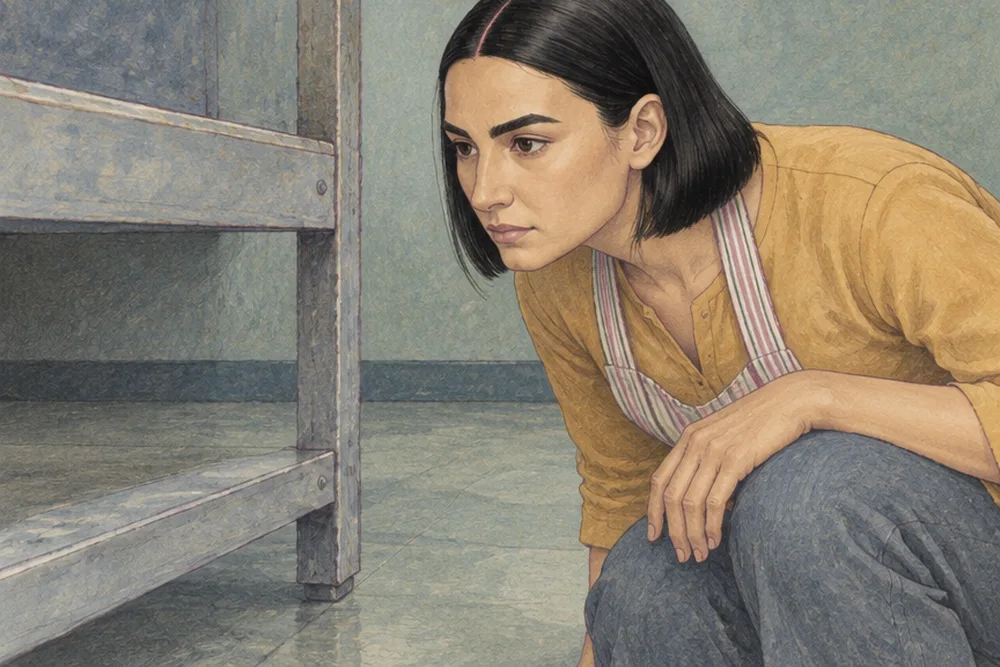
Ola crouched to check the clearance under the lowest shelf. Flour dust filmed the metal edge. She could rent a lockable storage unit uphill; she had already asked about one, and the monthly fee had made her wince. Or she could stack less and bake more often. That meant longer days, but not impossible ones. She had cut lunch service from her forecast. She had refused to build a business around customers who might never arrive.
“I can move the racks,” she said.
Ariane leaned on the cart handle. “You’ve got nowhere else to put your stock.”
“I’ve got somewhere. It costs money.”
“So does making three trips for every delivery.”
“I know.” Ola stood, brushing dust from her palms. The calculations came without invitation: van fee, flour sacks, hour of labor, the small margin left after paying herself. She wanted the bakery to work because she wanted the work, not because the figures looked brave on a board’s projection. “I can’t promise this makes it easy. I can promise the route stays clear.”