Rent for an Empty Table
Page 10 of 234
Chapters
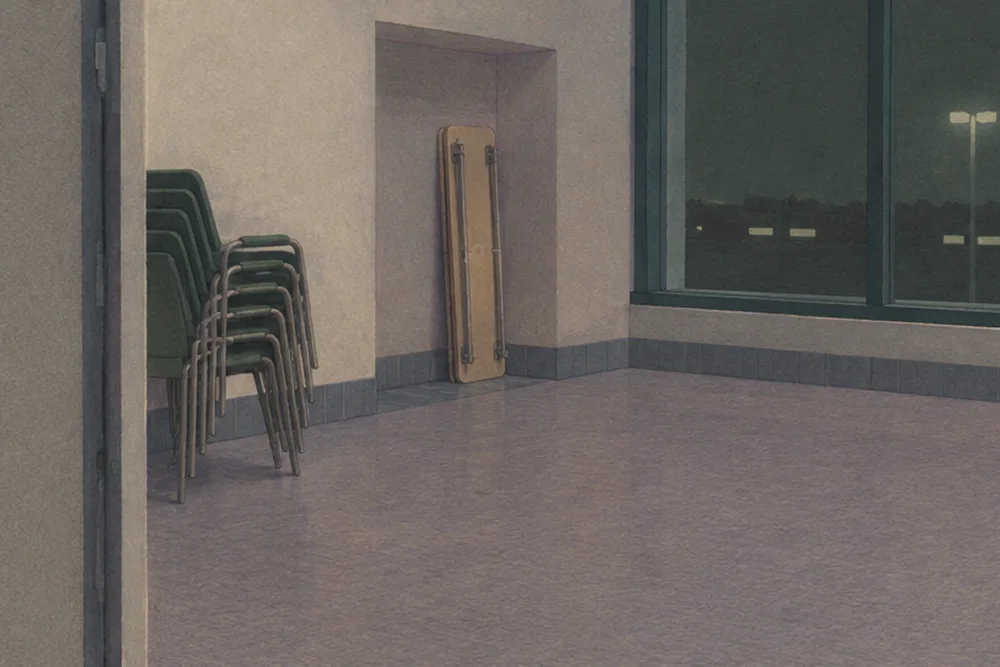
Ola packed her papers into the canvas bag she carried to work. On top went the oven report, the rough kitchen measurements and her savings statement. The table charge remained circled in the ledger, still unapproved on her summary sheet. She had not decided whether she could afford the lunchroom. She had only learned that the room’s cost was not limited to its walls.
She glanced toward the waiting room. The chairs had been stacked again. The table was folded and returned to the alcove, its taped dent turned inward. Nothing in the neat, empty room showed what had happened there. That invisibility seemed almost designed into the arrangement: fold the table away, wipe the floor, leave no trace a visitor might mistake for a service worth preserving.
Ola closed the office door and walked back through the terminal. Her shoes sounded louder now that the passengers had gone. She crossed the south passage and looked once at the locked lunchroom grille. The bakery remained an unpriced possibility, the ledger a set of questions, and somewhere behind the west wall Finn was still on duty. She went out into the night with the table charge open.
At the bus stop, she checked the schedule and saw that the next service had already gone. The posted times were printed in black on a white panel, but the small route map was streaked with rain. She could walk home in twenty-five minutes. She could also wait for the night bus that came after one, though the timetable offered no guarantee it would keep to the minute.
Ola considered turning back to the terminal office. She could ask Finn how the arrangement had begun, whether it had ever been reviewed, and why the board had let its purpose vanish from the accounts. But he had explained what the charge covered. More questions could wait for daylight. What could not wait was deciding whether she was going to build a business on a room whose oven needed replacing.
She pulled her cardigan tighter and walked the route uphill, past the closed pharmacy and the lit window of a late café. At the first crossing, she stopped to write down a number from the oven listing she had found earlier. At the second, she added a rough figure for installation. A truck passed, its tires hissing on wet asphalt. She imagined carrying a sack of flour through the lunchroom’s street door and found that the idea still pleased her, despite the accumulating expense.