Please Leave Your Name Inside
Page 96 of 235
Chapters
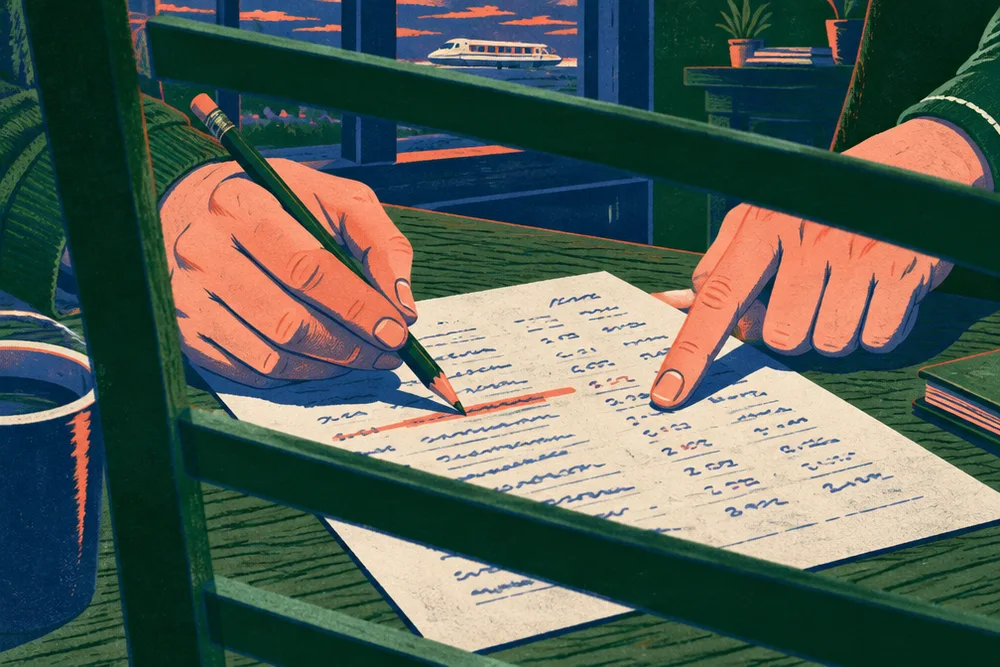
Una looked at the marked budget. The money from the trial had bought more than a night’s care; it had bought a report, a stubborn column, and a number they still had to calculate. She had wanted the room to prove it could work. It had proved that one late pickup could change the price of the whole idea.
At home, Una copied the buffer column onto a fresh page. She did not put the families’ names anywhere on it. Under “paid closing time,” she left room for a rate and a maximum number of minutes. Under “backup,” she wrote “household-specific,” then stopped before filling the rest.
The next day, Mara returned with three anonymized examples: a neighbor who could come on some weekdays, a relative who lived too far away for a short notice call, and a second household whose adults both worked at the plant. The examples had no names, and the limits were plain.
“This one is only a backup if the shift doesn’t run long,” Mara said, tapping the third note. “So don’t count it as coverage.”
Una crossed it out of the possible-cover list. It felt like removing a support from a bridge. Mara watched her do it.
“Better an honest gap,” Mara said, “than a line that looks covered until somebody’s stuck.”
Sef brought a price for a defined closing buffer. The figure was not impossible, but it pushed the total beyond what Una had hoped. He showed them where the provider might cover a small amount through the pilot budget and where that support had an edge.
“So we can start with fewer nights?” Una asked.
“That’s one option,” he said. “Or fewer places per night. But any change needs the families’ agreement and a schedule that staff can actually deliver.”
Una put her thumbnail over the last place on Thursday. “What comes off if this comes off?”
Sef turned the price sheet so she could see it right way up. “Try it.”
She made a copy of the little Thursday box and drew two marks in it instead of three. She took off one share of supplies. She got as far as staff hours and stopped. The two children in the new box would still arrive at the same time as the three in the old one. They would still be there at closing. She ran her pencil down to rent, which she already knew better than to touch.
“Paper cups,” she said.