Please Leave Your Name Inside
Chapter 10 · A Sign Without a Roster
Page 119 of 235
Chapters
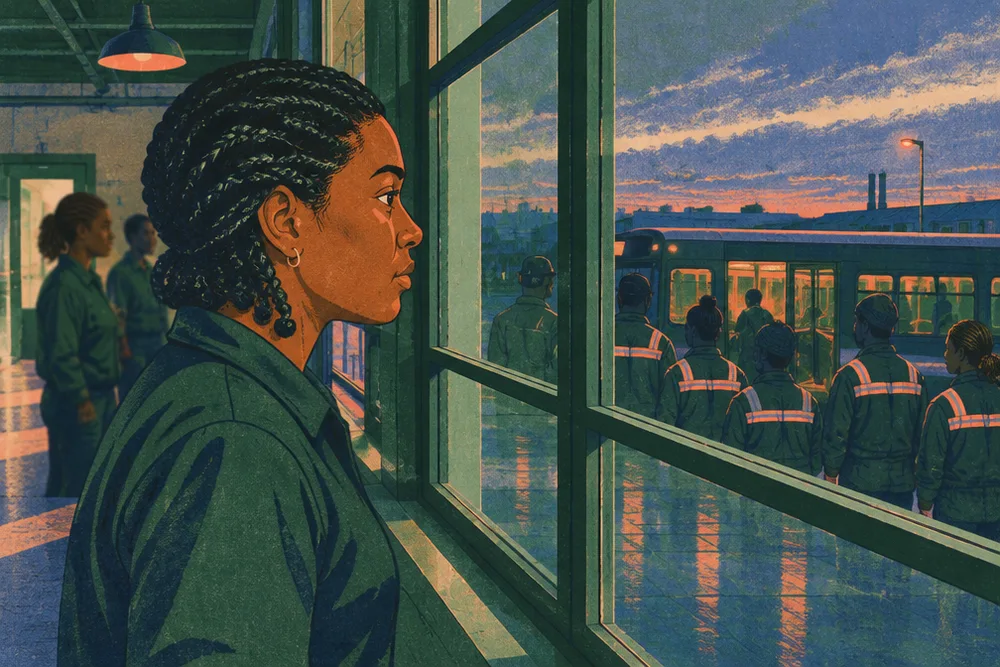
The first draft said: NO NAMES WILL BE SHARED WITH ANYONE. Una wrote it in block capitals on the back of a laundry price sheet, then stared at the sentence until the ink seemed to accuse her. The room above Spindle Wash was empty except for the blue tape marks on the floor, a shallow sink, and the folding table Della had let them borrow. Through the west windows, a Cresswell shuttle idled at the stop. Its doors opened and shut; workers crossed the pavement in pairs, shoulders hunched against the November damp.
“Anyone is too many people,” Sef said. They crouched beside Una instead of leaning over her paper. Their translucent green ruler lay across their knee. “We need names for emergency contacts, authorized pickups, and incident records. Alder keeps those records. We don’t give them to Della, and we don’t give them to the plant. But I can’t promise that no one will ever see a record. A court order, a safety investigation—there are limits.”
Una crossed out the sentence. She did it carefully, leaving the letters readable beneath the line. “So it isn’t anonymous.”
“The care isn’t anonymous,” Sef said. “The sign can be simple. The intake can be private. Those are different promises.”
Mara stood by the table with her coral insulated lunch bag hooked over one wrist. Her black braids were looped against her neck; one heel rose and fell as she watched the shuttle stop. “And the window isn’t private just because the sign is.”
Una looked out. The shuttle queue stood directly opposite the upstairs windows, close enough that she could make out the reflective bands on the workers’ jackets. From where she was, the lower panes reflected the room’s bare floor. From the street, a person waiting for the bus could look up and see anyone who stood near the glass.
“They can watch the room?” Una asked.
“They can watch a window,” Mara said. “They can notice who goes in. The manager doesn’t have to get a list from anyone if he can make his own.” Her voice was flat, not frightened. That made the fact land harder. “He still assigns overtime. People still have to decide whether being seen here is worth risking a bad week’s schedule.”
Una thought of the petition paper she had taped to the laundromat glass, all those blank lines beneath Iona’s name. She had believed a name on paper meant somebody had chosen to be counted. Now she understood that a person could be counted without ever agreeing to it.
“We could put up curtains,” she said.