Please Leave Your Name Inside
Page 121 of 235
Chapters
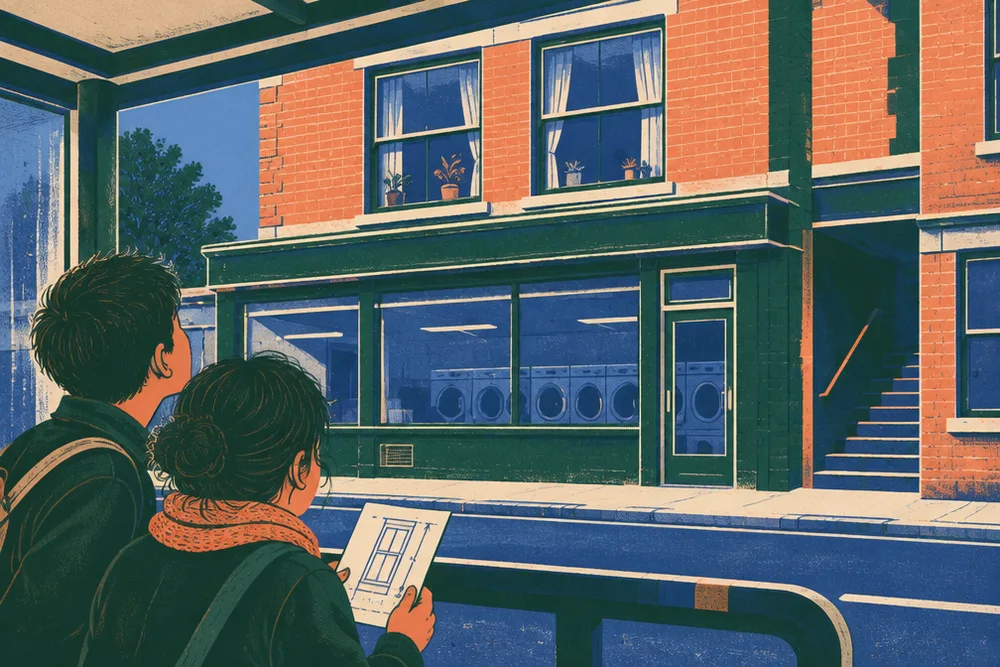
“We haven’t decided where anything goes,” Una said. “We’re checking first.”
“I don’t want the table by the window.” Kit looked at Una, not at their mother. “I don’t want people looking in and knowing which kid is mine.”
The words made Una’s face warm. “Okay,” she said. “Then we won’t plan around the table yet.”
Sef moved a chair out of the way so Kit could walk the room without bumping into it. He asked them to show where they would want a quiet place to rest. Kit crossed to the wall beside the shallow sink, then changed their mind and chose the opposite corner, where the door could not be seen from the bus stop.
They took the paper to the landing. Kit stood by the upstairs door and looked through the gap between the railings toward Tern Steps. Una followed their gaze, then went down with them. The stairs opened around the corner from the laundromat entrance, a short walk but not an invisible one. From the pavement, the west windows sat above the shop roofline.
At the bus stop, Kit stood on the bench’s lower bar to see. Mara caught the back of their cardigan before they could climb higher. “Feet on the pavement,” she said. Kit stepped down without arguing.
Una tried the same angle. The glass caught the gray sky and the laundromat’s sign, but if someone stood close to the window, the reflection thinned. A person in the queue could see the outline of a head, the movement of an arm, maybe a face turned toward the glass.
“Even if you cover the bottom,” Kit said, “they can see the light.”
“Yes,” Una said. She had no answer that would turn the windows into a wall. “They’ll know the room is being used.”
“They won’t know who’s in it,” Mara said. She put a hand on Kit’s shoulder. “That’s still something.”
The shuttle doors sighed open behind them. Workers stepped down and moved past the stop. Una watched their eyes travel over the windows without stopping. The room could not promise to disappear. It could keep the names off the street, and it could let the families decide whether the remaining visibility was acceptable.
Back upstairs, Una drew a horizontal line across a fresh sheet to mark the lower panes. “Screening here,” she said. “Clear above. Clear at the door. Not curtains.”
Sef checked the proposed height with his ruler. “A perforated film or a fixed translucent panel could work. We’d need to confirm the material and installation meet the site requirements.”