Passport for the Wandering Ferry
Page 211 of 230
Chapters
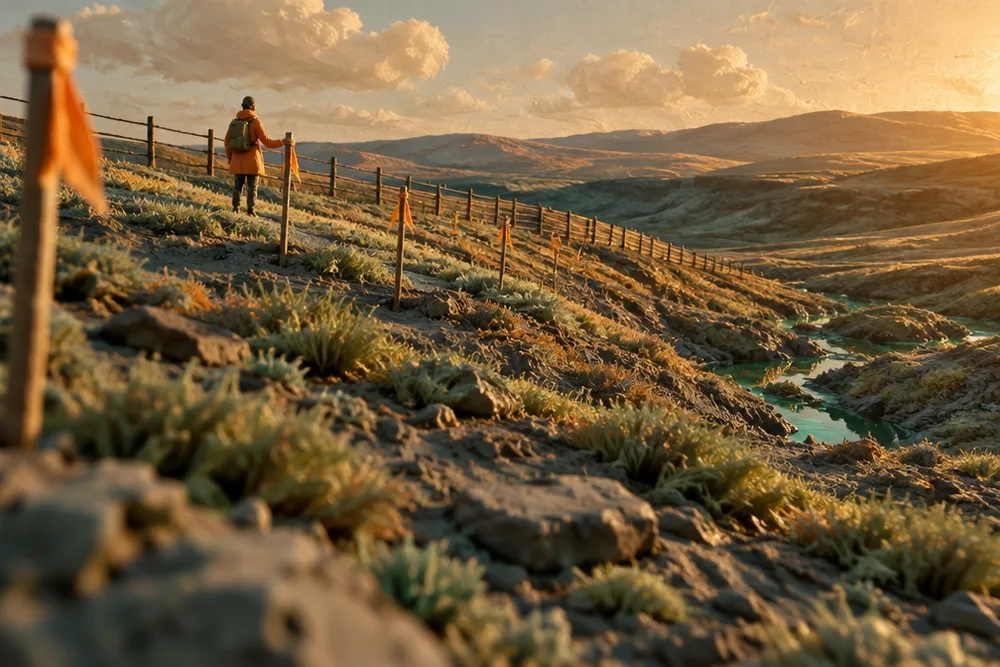
Neri led. They did not stride ahead as if the others were guests on their land; they paused at each stake and waited for the officials to catch up. “Stock can pass here,” they said at the first bend. “The gate has to open wide, and it can’t swing into the track.”
“That’s a different gate from the one on the drawing,” Ivo said.
“It is,” Neri answered. “The drawing didn’t ask the cattle.”
Quinn watched the councillors look from the stakes to the uneven ground. At the top, the path widened along the commonage edge. From there the land dipped toward the old landing, and the seep made a faint, dark thread through the stones. Quinn had stood at this shore with a camera and watched the herd drink. The route they walked now would leave that approach outside the visitor path, not hidden behind a fence that cut the animals off from water.
A Latch councillor crouched to inspect the wet ground, then straightened with a hand on one knee. “How do we keep people from following the stock track?”
“Don’t make it a public way,” Neri said. “Mark the preserve boundary. Keep the passenger landing elsewhere. Let the gate be for the people who already use it.”
Tessa, who had been quiet on the climb, glanced back toward town. “And don’t put a picture of the herd on the ticket. The landing isn’t a show.”
“No publicity route,” Neri said. “No access beyond the agreed work and monitoring.”
Ivo opened his case and checked the revised line against the stakes. Quinn held the map flat while the wind lifted one corner. They marked the gate’s position, the seep buffer, and a narrow stock passage that did not cross the proposed passenger approach.
“This is defensible,” Ivo said. His voice carried the tired care of someone who knew a correction did not erase an error. “And it matches what’s on the ground.”
The Latch councillor touched the nearest stake with two fingers. “Then this is what we sign—not the old alignment.” Neri nodded once. The ground had taken the argument out of the abstract.
Back in the Measure Room, the clerks laid the revised boundary sheet where the councillors could sign it. Ivo placed the earlier drawing beside it instead of removing it. The old line and his initials remained legible, with the dated correction on a separate sheet.
Keeping the original packet dry had been Quinn’s job. Keeping the record straight meant leaving the old drawing as it was and putting the correction beside it. The papers had to show both what had been proposed and what had been found.