Passport for the Wandering Ferry
Chapter 14 · The White Mark Goes Under
Page 152 of 230
Chapters
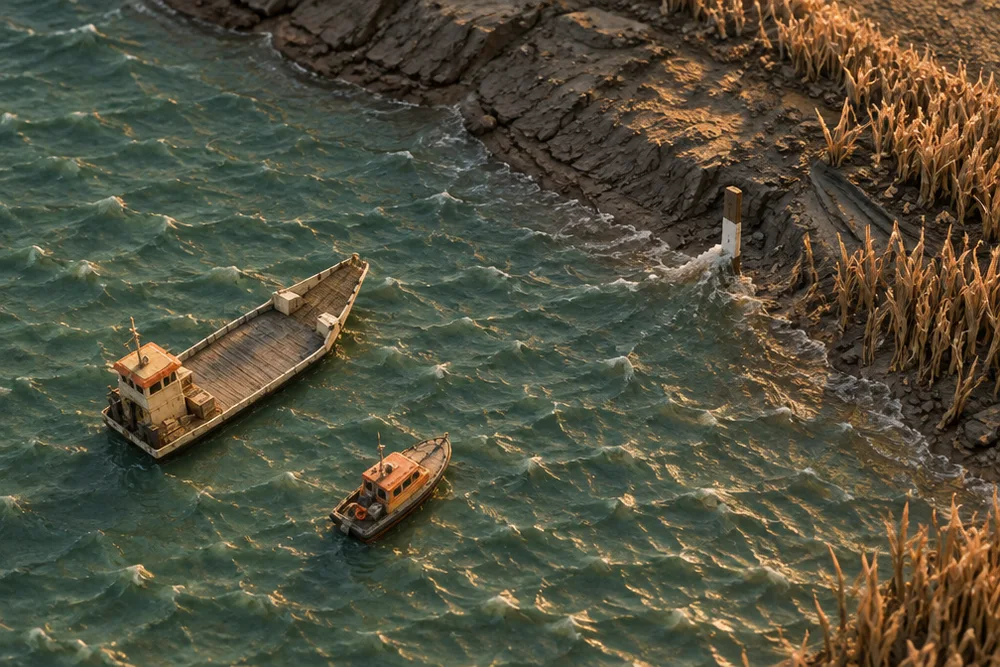
The wind had turned the jade surface of Bell Cut into a field of short, hard wrinkles. Quinn stood on the ferry’s bow with the soundings slate braced against one hip, watching the lowest white shore mark. It was a strip of painted board fixed to a stake beyond the reeds, set at the limit the crew had agreed was safe. A gust drove a wave against the bank. Water climbed the stake, shivered over the white strip, and covered it.
“There,” Quinn said into the radio. “Lowest mark’s gone.”
Mara’s voice came back from her rescue launch, steady beneath the radio’s hiss. “I see it. Wind’s quartering across the cut. What’s your reading?”
Quinn looked from the covered mark to the ferry’s stern. The flat black hull rode high now, stripped of benches and festival ballast, the bronze arch already tagged and carried ashore. The replacement drive had passed its tests, and Bell Cut had depth enough on the soundings. But the water was rising unevenly, pushed sideways by the wind. The planned alignment depended on marks that were no longer visible where they needed to be.
“No transit this morning,” Quinn said. Their jaw tightened on the words. “We wait for the lull.”
There was a brief pause on the radio, long enough for Quinn to hear the wind scrape at the wheelhouse glass. “Agreed,” Mara said. “Bring her back to the pocket. No point proving we can turn in weather we didn’t plan for.”
Quinn eased the controls until the ferry drifted into its surveyed waiting place. The stern moved toward the reed shelf, then steadied under a small correction. They kept their hands light on the levers and their eyes on the distance between hull and mud. The ferry’s wake pressed flat against the reeds without breaking them loose. In the wheelhouse, the gray document wallet sat secured in its sling, two cloth ties tucked neatly under the flap. Quinn had once thought that getting those papers home intact was the job. Now the packet was dry, and the job was to keep the boat still.
Mara brought her launch alongside, not close enough to touch. “You’re sure you’re comfortable holding here?”
“Yes. We’re inside the pocket and the shore marks are clear from the upper bank.”
“Then I’ll meet you there. We can set another pair before the wind changes its mind.”
Quinn shut down the drive. The sudden quiet made the hull’s small movements feel larger: a lift, a settling, the soft slap of water against the red scupper. They checked the mooring, then climbed the bank by the agreed walkout, carrying the radio and the camera with its cobalt strap. The decision had cost them the morning tide window. It had also kept the ferry out of the reeds.