Passport for the Wandering Ferry
Page 182 of 230
Chapters
From where Quinn stood they could follow the first stretch of her walk: past the shutters, across the top of the market ramp, then left where the brick buildings cut off the view. After that the road would pull away from the water to get around the old mill grounds. They had taken it once with Mara in the yard cart. There was a place where you could see Latch across a few hundred yards of lake and still have most of the road ahead of you.
Tessa came back down as far as the platform. She had the pencil stub between two fingers.
“Seventeen,” she said. “Remind me when I get to Latch. I’ll remember the wool and forget the number.”
Quinn took out the salvage book and put the number in a top corner where it wouldn’t run into anything else. Below it there was room for the ramp figures. They kept the page open with their thumb and looked down at the pale end of the ramp. The mark its shadow made was already a little different. On the other side of the deck, Mara straightened from the fenders and started aft.
Mara checked the stern line and the spare drive access before she let Quinn leave the deck. “We’ll need a proper hinged threshold, inspected and fitted to this platform. And somebody has to own the checks.”
“I can take the measurements,” Quinn said.
“You can record them. Don’t design a piece of access hardware alone because you want this boat to count as home.” Mara’s voice was even. “That’s how people get hurt.”
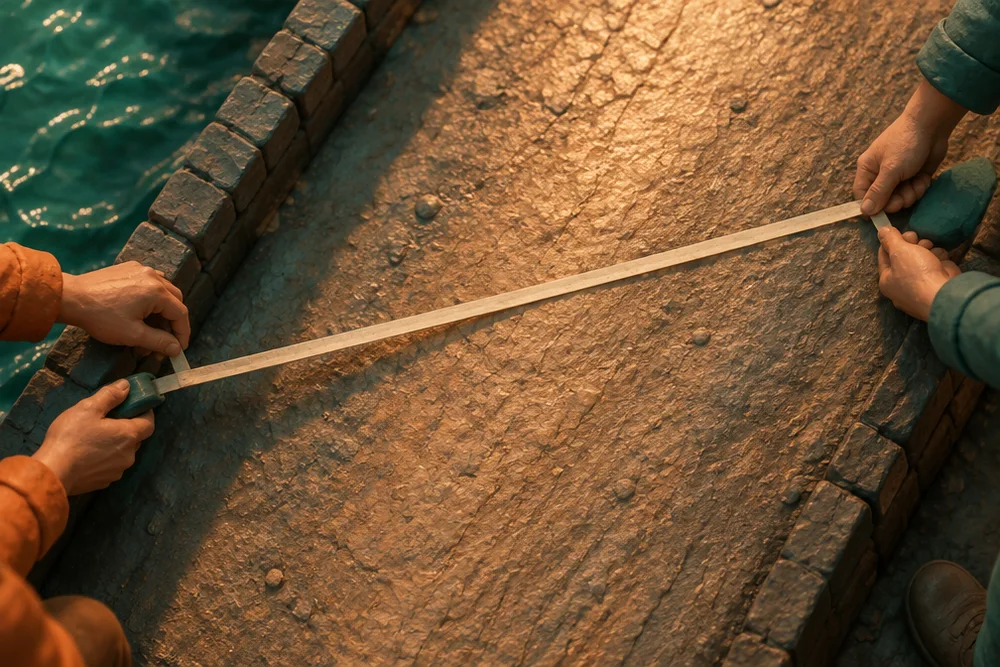
Quinn accepted the correction. They took measurements at the hinge, the platform lip, and the nearest fixed post. Tessa held the end of the tape while Quinn wrote figures in the salvage book. They measured the ramp at rest and under the slight movement of the hull against its fenders. The gap changed a little each time the water lifted the ferry.
“We’ll need a hinge that tolerates that,” Tessa said. “And a surface that won’t turn slick.”
Mara added a note about the movement. “And a load limit. A ramp isn’t safe just because it reaches.”
Quinn entered both comments. Their writing had been cramped at Hush Steps, when every line felt like a race against the drawdown. Now the paper held measurements and qualifications. The crossing might end at a different town and still require the same care as the route they had been trying to recover.