Orchard of the Drifting Boats
Page 204 of 231
Chapters
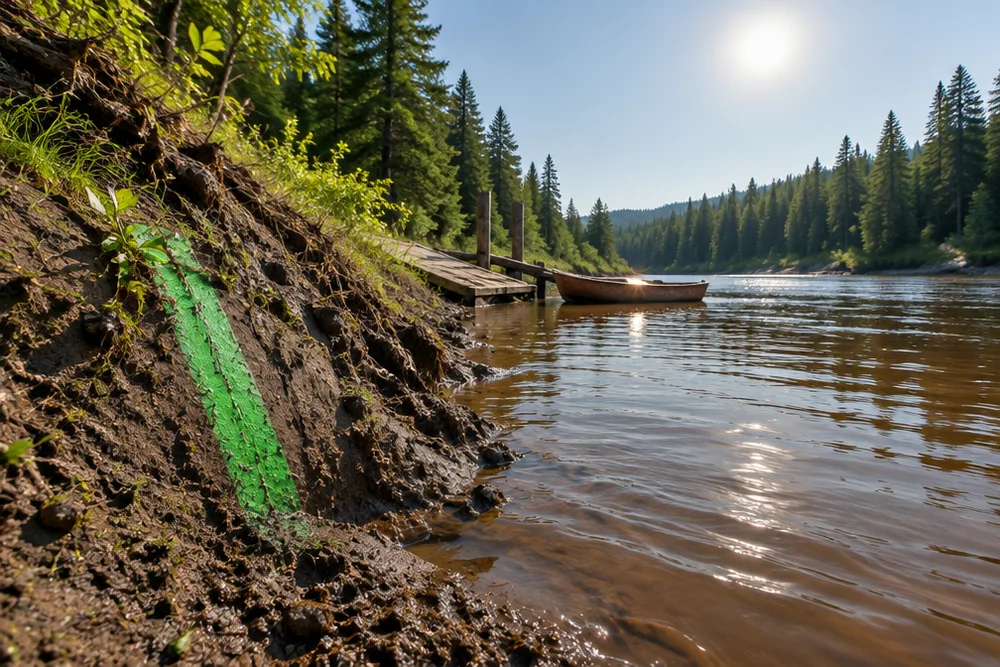
They returned without touching wood. On the shore, Tallis examined the green marks and amended one. He moved it a handspan toward the outer edge, then pressed the pencil hard enough to leave a dark stroke.
“That is the last safe boundary,” he said. “A mark isn’t a promise.”
“We’ll write that too,” Orla said.
Iven had one foot in the survey scow and one on the stones when somebody whistled from the landing. A narrow boat was backing out from the shared line. Two men sat in it with their trouser cuffs rolled, a wash copper wedged between them. Its black rim stood higher than either man’s knees. Orla had seen them lug it up from the flooded houses that morning. They had emptied it, but it still took both of them to shift it an inch.
The man at the stern pointed to the green stroke Tallis had just moved. “Is that the one we go by?”
“Hold where you are,” Tallis called.
The man dipped his oar. The bow came round a little farther before it stopped. From where Orla stood she could see what he must have seen from the landing: Tallis coming back dry, the three of them standing about on the stones, the fresh green stroke bright enough to pick out across the water. It looked more like an invitation than anything they had meant to leave.
“We watched you do it,” the man in the bow said. “We’ve got less boat than you.”
Iven stepped out of the survey scow. “Can you see past the copper?”
The stern man bent sideways. His boat tipped with him, and the copper’s rim scraped his companion’s shin. The man in the bow caught the rim with both hands. Neither looked toward the bend.
“Come back to the step,” Orla called. She almost added that she would take them through herself. In the stern she could see past the copper if they shifted it, and Tallis was here to stand watch. She could get them round. The next boat would see that one go, just as these men had seen the survey scow.
The bow man picked up his oar again. “We only wanted to save the carry.”
“How far are you carrying it?” Orla asked.
“To the shed.” He looked past her to the roof. From where he sat it was close enough to throw a stone onto. By the landing steps it was a long way to take a copper with no handles.