Orchard of the Drifting Boats
Chapter 16 · Three Inches of Seed Soil
Page 175 of 231
Chapters
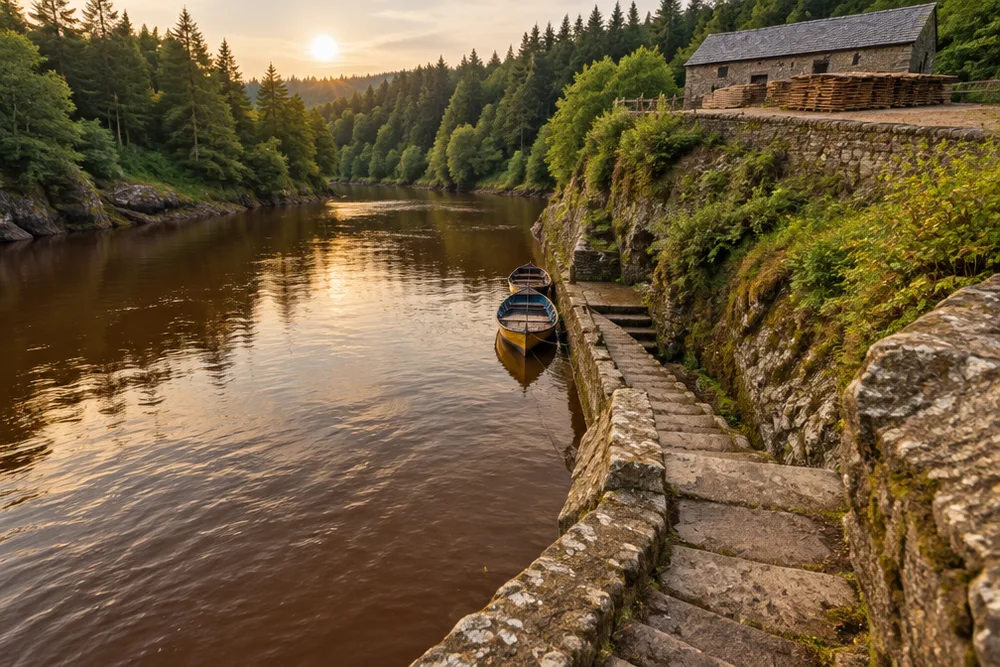
By the time the convoy reached Whistle Shelf, evening had turned the river the color of steeped tea. The high former drying yard stood above it, roof intact, its landing little more than a narrow set of steps and a stone lip. There was room to bring boats in one at a time. There was not room to pretend the tide had stopped rising.
Orla stood on the shelf with her torn left knee dark from spray, counting hulls as they came around the bend. The passenger scows rode high now, emptied of people and bundles. Their boards flexed lightly under the returning wash. Beyond them, the three tree boats moved together under the sling and bridge boards, the nest mat a dim, reed-woven shape between their crowns.
“Seed hull last,” Mera called from the landing. Her evergreen vest was soaked to the waist. She had one hand braced against the post and the other raised to direct the boats. “Keep its soil box clear of the stone.”
The seed-pear scow answered with a hollow scrape. Its bow had swung against the landing lip. Orla heard the wood grind, then a small, sharp knock from beneath the hull.
“Hold!” she shouted. “Nobody push it off the step.”
The next wave lifted the other boats, but the seed hull stayed caught for a breath. Its side rubbed stone. Water lapped over the lowest plank, and a dark thread began to seep through the seam below the soil box. Mera’s face tightened. The tree’s red peg showed above the rim, bright against wet wood.
The boats had made it through the Shut Elbow. They had turned. They had brought the people to high ground. Now the seed tree was taking on water at the very place they meant to leave it safe.
Orla went down the old wash steps until the river reached her shins. The seed hull rose and settled against the stone with each passing wash. The leak was small, but the scow’s loaded waterline sat low, and the wet soil pressed at every seam.
“A wedge,” she said. “We can lever it off.”
“And split the side,” Mera replied. She was already beside the hull, judging its angle. “The stone’s under the rim. Not the bow.”
Iven was at the rear of the passenger scows, keeping them from drifting across the landing approach. “Can we shift the tree?” he called.
“No,” Mera said. “Not by lifting. We lighten the hull.” She looked at the box of rich soil, then at the water creeping in. “Three inches. No more.”