Orchard of the Drifting Boats
Page 189 of 231
Chapters
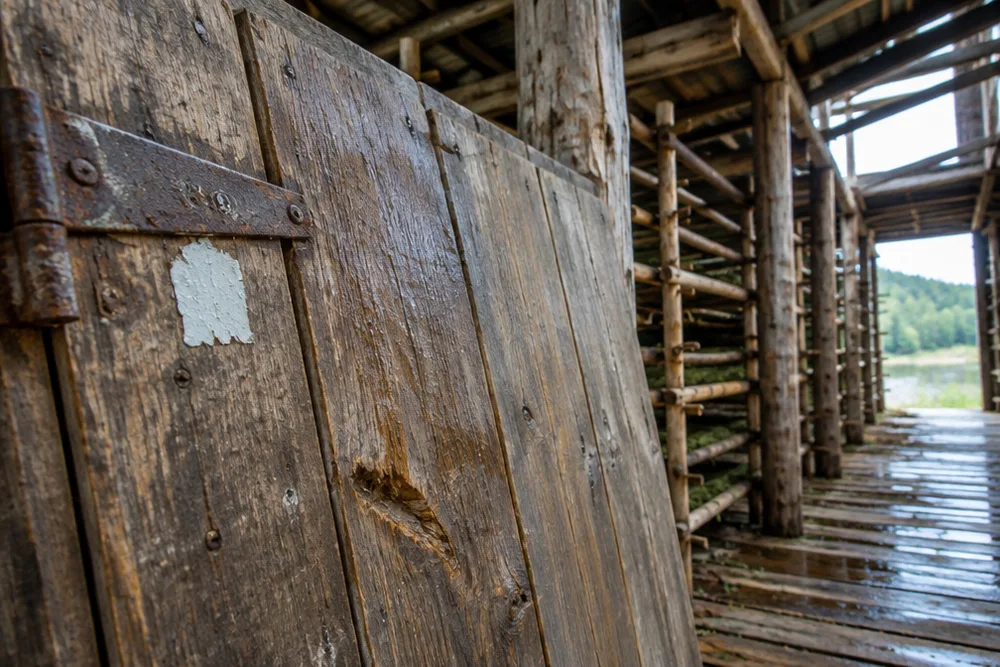
Orla ran her thumb along a gouge in the nearest plank. A square of pale paint clung near one hinge. She recognized it as a back-room door from the house of a woman whose name did not appear in the orchard book. “How many people are sleeping in here?”
“Forty-one last night. Thirty-eight now. Three took the upper rooms at the meeting house.”
“I thought there were thirty-four.”
“There were thirty-four on the first roll.” Iven paused, his clipped fringe falling toward the eyebrow it usually covered. “The ones in the back rooms don’t get asked to meetings about boats.”
Orla did not say that she had made the roll from the owner list. She had already seen the gap between those numbers when the water rose, had promised space before knowing the load, and had then watched Iven go door to door to find the people she had missed. She could not make that omission into a mistake that belonged to a piece of paper.
“We’ll need to replace these for the walk,” she said. “The upper timber store is nearly empty.”
“Then don’t take them.”
The directness of it made her stop. Iven had been carrying other people’s things since the first surge: laundry, bedding, names, the back end of a plank. He had done it without asking whether the work counted. Now he stood with both hands free, knees still bent, waiting for her answer.
“I’m not taking them yet,” Orla said.
“You asked for them.”
“I did.” She looked over the stack again. “I’m going to find another way to pay for the repair.”
Iven gave a small, humorless nod. “Good. Because this is not spare wood.”
Orla had no useful reply. She went back toward the table, but Mera had risen and was blocking the narrow path. The older woman held a red envelope in each hand. One was dry enough to keep; the other had softened until its folded edge sagged.
“You’re looking for timber,” Mera said.
“I’m looking for timber that isn’t holding up someone’s bed.”
“Then look at what you’ve been keeping.” Mera laid the damp envelope on the table beside Orla’s closed book. “You have a stack of old pruning stock at your house. Straight lengths, cut last winter. You said it was for the trellis by the seed pears.”
Orla remembered the bundle in the lean-to: chestnut and ash poles, seasoned but still rough, enough to mend the trellis and replace several stakes. She had been saving it for the next growing season. “It won’t make a whole walkway.”