Orchard of the Drifting Boats
Page 160 of 231
Chapters
Nemi waited at the head of the steps. Orla shifted the short lines into the hand nearest the river and turned to follow.
“We withdraw,” Nemi said. “Slowly. No sudden movement.”
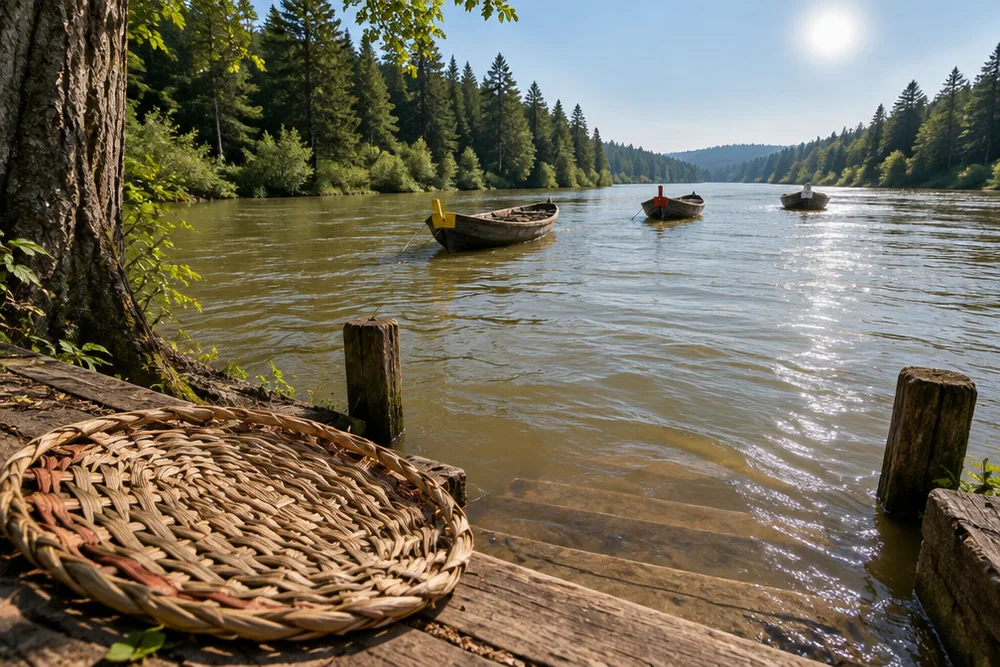
Orla backed along the wash steps, paying out the short lines until the tree scows rested apart from the ledge. She did not pull them back toward the village. The boats would remain close enough to tend if the bank shifted, but not close enough for their hulls to press against the nesting place. The open space between them seemed too large, then seemed necessary.
Nemi moved first toward the passenger route. Orla followed, keeping her eyes on the mat until the bank’s curve hid it. The rising water filled the marks between the stones. She had a clear view of the high ledge for only a few more paces; then there was water, green-brown and bright under the sky.
“If the parent doesn’t come back?” Orla asked.
Nemi stopped. Her braid lay damp against the side of her face. “Then I’ll record that it didn’t. I won’t write why unless I know.”
“And if it does?”
“Then I’ll record that, too.” Nemi turned toward the landing. “That’s not the same as promising it will.”
Orla understood the distinction and did not like how little it let her control. She also knew that a made-up certainty would not give a bird a safer ledge or a household a sound boat. “I’ll keep the hulls here until the landing clears.”
“Keep them off the bank.”
“I will.”
They descended the steps at a careful pace. Behind them, the wrack ledge disappeared around the bend, hidden from view. The exposed shelf Nemi had chosen first was now just a broken edge of mud, its green mark nearly swallowed by water. Orla could not see the nests, and could not tell whether the higher ledge would hold them.
The last of the passenger boats had reached the landing queue. Orla heard Iven calling instructions from downstream, his voice carrying across the water: one boat clear, the next waiting, keep the gap. The river answered with the hollow knocks of hulls against the landing timbers.
Orla stayed beside the tree scows. She paid out their lines, checked the knots, and moved the boats just far enough from the steps that their sides would not grind. The red peg and white patch remained clear above the water. The split-stem crown, shortened by the turn, had an uneven silhouette now. She did not try to repair it with a new line or a new plan.