Orchard of the Drifting Boats
Page 115 of 231
Chapters
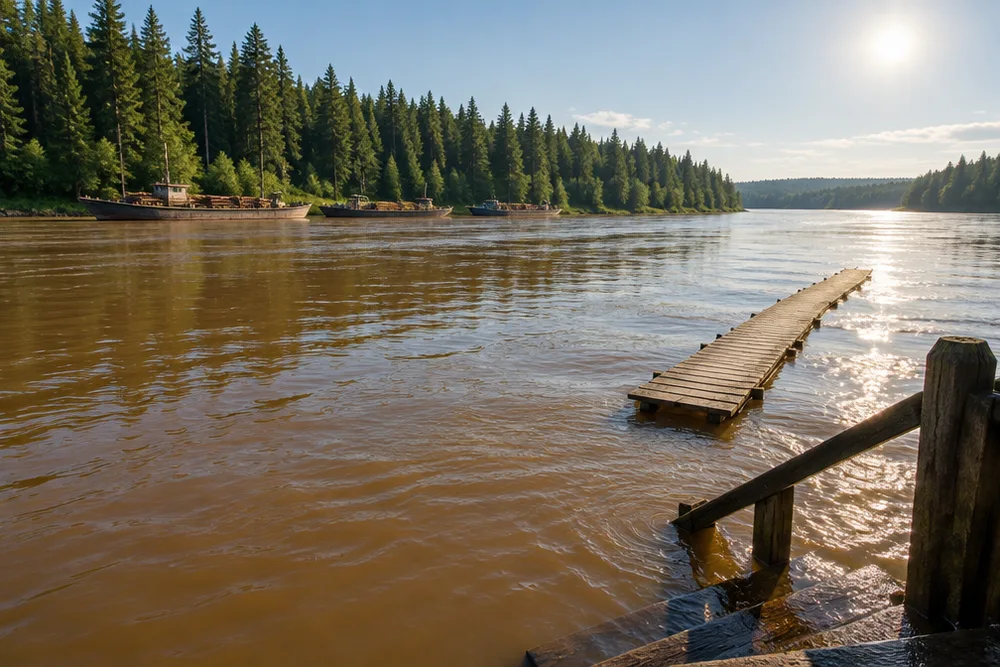
The abandoned walk began to move as soon as the last plank was free. Its outer end swung downstream, boards clacking softly against one another. A grower reached for it, but Iven caught his sleeve.
“Leave it,” he said. “It’s not attached to the shore now.”
“It’s good timber.”
“And it’s between us and the boats.”
The grower let go. The walk slid away a little more, carrying its empty pegs and the marks of years of feet. Orla watched it drift without knowing whether it would snag on a bank, turn over, or disappear into the wider river. She had wanted to save everything that had belonged to the orchard. That wish had not become wiser merely because the water had made it impossible.
“The people are counted,” Nemi said, coming to stand beside her. She held the roll closed against her chest. “The tree boats are still out there.”
“I know.”
“And there’s no spare room in these pairs for the nest mat.”
Orla looked beyond the passenger boats to Spoon Flat. The three scows rested on the mud crescent, their crowns bent in the wind. The wrack and line between them formed a low, dark platform; from here she could not see the nests. She could see only a strip of reed moving where the tide pressed against the flat.
“We’re not moving them separately,” she said.
“I didn’t say we should.” Nemi’s voice was tired, but steady. “I’m saying the people are safe enough for the next part. The nests aren’t.”
The passenger scows had to be turned toward the outer water, where the tree boats could be reached. Their paired hulls rocked under the load. Orla called for the pole hands to take their positions, but Iven lifted one hand to stop her.
“Not yet. We need to know which pair is taking the next household. If we shove off without a queue, the back scow will swing into the walk.”
“The walk is going.”
“And it can still hit us.” He pointed. The loose timber had rotated across the current, its nearest corner angling toward the boats. “Give it a moment.”
They held their ropes. The floating spine drifted past, close enough for Orla to see the old wear grooves on its boards. It turned broadside and caught the current, then slid away toward the bend. Only when its end cleared the scows did Iven call for the lines to be shortened.
The boats gathered closer, their passengers quiet. No one had boarded with a trunk. No one had been left behind because they owned less. Orla held to that difference while the water took the walkway out of sight.