No Breath Behind the Wall
Chapter 7 · The Board That Comes Back Up
Page 83 of 273
Chapters
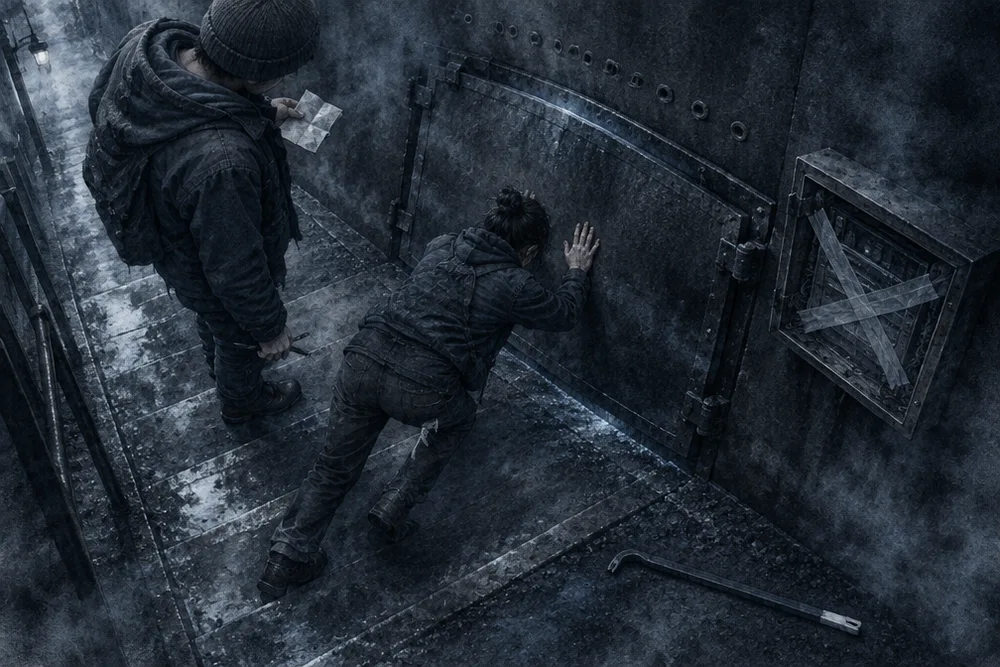
From the barrier line, Mara could see where the coal door bowed inward. A pale line of fresh grout ran around its edge, too clean against the old soot-dark brick. Beside it, the council display panel hung open on one hinge in Spoon Yard, its printed history of the baths folded inward like a face turned away.
Yves stood at the top of the sunken court with the unsigned fault notice tucked under his arm. He had refused Pike’s request to blame the dancers for the damage, and the blank signature line was already creased from being carried. “It’s not stuck,” he said. “It’s been told not to open.”
“You have a useful way of describing doors.” Mara tipped her head to look along the frame. “Can you see a handle?”
“No.” Yves came down as far as the barrier and stooped to look at the narrow gap where the door met the frame. His pencil was behind his left ear, its eraser flattened. “And I’m not putting my hand in there.”
“I didn’t ask you to.”
“You were thinking it.”
Mara looked at him. He had come to the yard because he chose to bring the invoice and the notice, he had said. Not because the building had called him, not because he owed her for anything. She kept her reply behind her teeth and turned toward the hall instead.
The coal door sat below street level, where the delivery court sank between the back of the baths and a retaining wall. A short ramp climbed to the lane. The air smelled of wet stone, old ash and the sour metal of rainwater trapped in a drain. The council panel had been installed over the door to explain how clean sheets once passed from the laundry to the families waiting here. Its tidy lettering hid the bowed boards and the new white seam around them.
Mara took out the tape measure. The habit was easier than standing still. She checked the width of the approach at the top of the ramp, then again where it narrowed by the barrier. Neither measurement told her what held the door shut. “If there’s an inside catch, we need to know where it is.”
“And if there isn’t?” Yves asked.
“Then we stop pretending the invoice explains the whole job.”
The invoice was folded inside Yves’s ledger, the paper softened at the creases. It listed a repair to the council display frame, a fresh seal around the former laundry entrance and a date from three weeks before the first breath had crossed the grout. Pike had admitted authorizing the work. He had not explained why a property officer needed to seal a door nobody used.