Deeds for Drowned Streets, Toast for the Post
Page 250 of 266
Chapters
Nell handed her the pension clearance. The paper had been signed and countersigned, with the date entered in green ink. Marta folded it once and put it in the inside pocket. It was lighter than the tarred parcel, though it marked the end of more years than she could count without looking at her records.
“You can come back whenever you like,” Nell said.
“I know.”
“Not to work. Just to visit.”
“I know that too.”
Nell’s mouth tightened at one corner. She had a way of holding back concern until it came out as a practical question. “Do you know what you’re doing next?”
“No.”
“You’ve always known the next delivery.”
“Then it’s a new condition.”
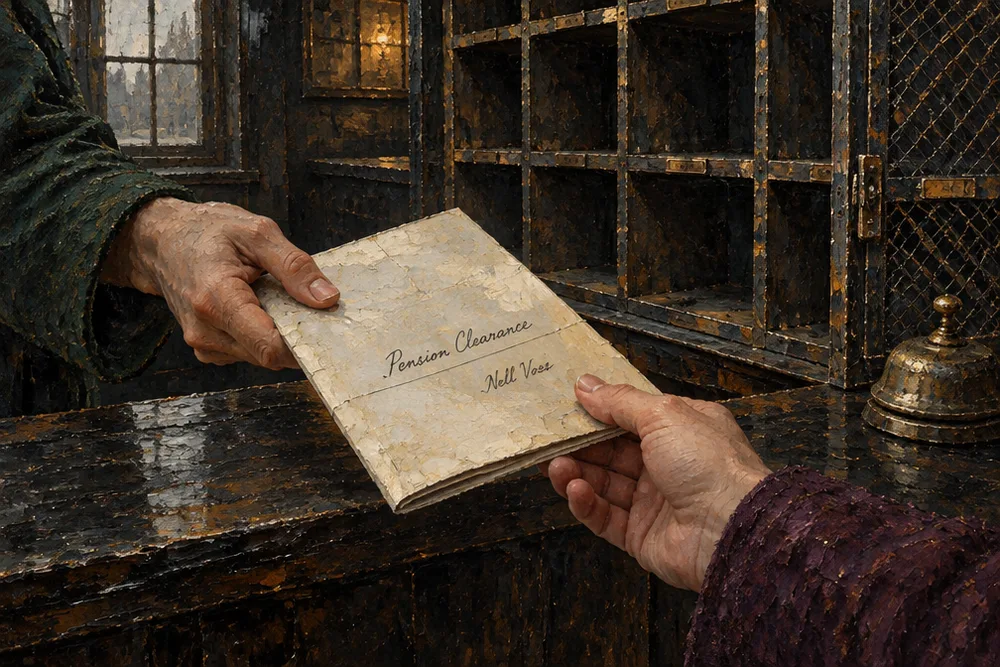
Nell gave a short laugh. Marta touched her elbow, briefly, and then let go. They did not embrace. They were not people who made every ending into a ceremony.
Marta looked once toward the office window. The counter, ledger, sorting lamp, and empty cage rested in their familiar places. The old balance pit stayed under the parcel cage, unseen. She did not ask whether it had settled.
When she stepped outside, the air smelled of salt, wet stone, and something warm from the bakery. Bramwick was returning to its Saturday habits. Shop shutters lifted. A man carried a basket of washing toward the shared landings. Two tenants stood at the square’s edge comparing the room numbers on a sheet of paper Oren had given them.
Marta walked without a bag. The empty space at her side felt unfamiliar, but not painful. She passed the path that led toward the causeway and kept to the uphill street.
At Barley Steps, Oren was back at work. He stood on the landing with his grandson’s chalk marks on the wall behind him, faint white lines showing where a bed had been measured for dismantling. The boy was awake now, peering over a stair rail while Oren spoke with the woman whose window would not shut.
“I’ve got the list,” Oren said when he saw Marta. He held up the notebook. “The repair requests are separate from the survey. I’m not letting the landlord say the tide made his window bad.”
“It was bad before the tide,” the woman said.
“That’s written down too.” Oren turned the notebook so she could see. “You can take a copy.”
She read the line, then nodded. This time, she did smile, a little. “I’ll keep it.”