Deeds for Drowned Streets, Toast for the Post
Page 166 of 266
Chapters
“A tenant has to leave tonight. She can take her papers and her chair, not the changes that make the room usable.”
“That’s the kind of detail that disappears when people say everyone’s been moved to safety.” Nell set down the date stamp. Her cardigan cuff bore a dried patch of varnish. “Did you write it down?”
“Oren did. He’s keeping the old and current numbers together.”
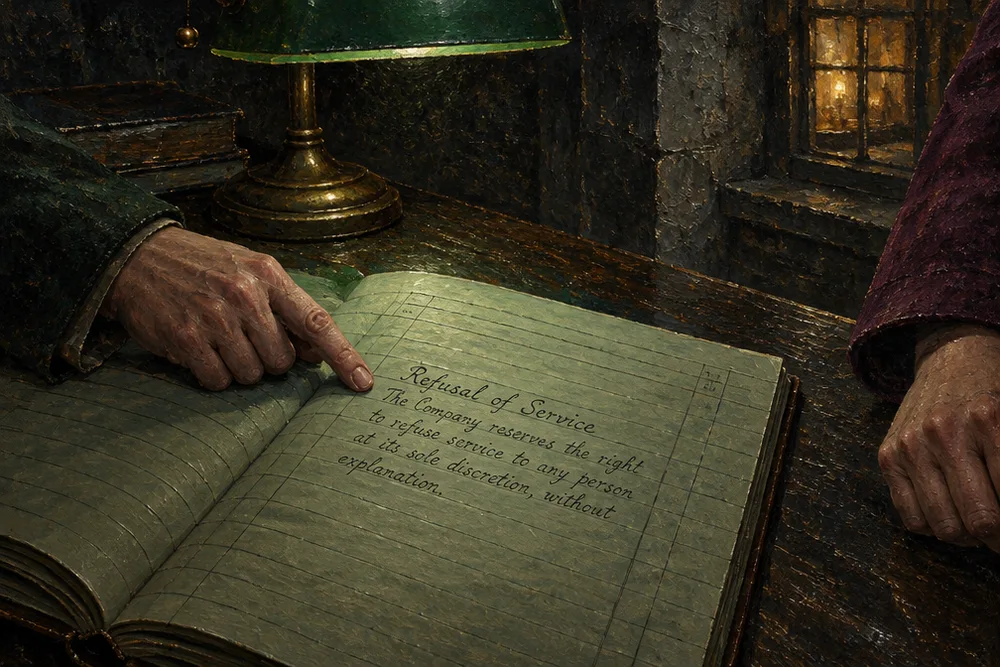
“Good.” Nell pulled the ledger toward her. “Now. The refusal clause.”
Marta stood over the book. The open page contained her relief number, entered in Nell’s neat hand, and the line that remained blank for the return. Her own signature from forty years earlier sat in another record, cramped beneath Edwin’s witness mark. She had learned the procedure by daylight the day before. Now she wanted to see it written again, where it could be followed without guessing.
Nell tapped the relevant lines. “The carrier must take the bundle past the bell again. Then return it here before dawn. It goes back in the weighhouse cage. We record a witnessed return against the original receipt.”
“The receipt stub is enough if the dispatch slip is missing?”
“The slip is the route instruction, not the receipt. The stub establishes the number. The account is ours to close.” Nell turned the book so Marta could read. “You don’t have to repeat it back to me. You only have to do it.”
“And if I don’t?” Marta asked.
Nell’s hand stayed on the page. “The agreement defaults at dawn. You know what that means.”
“Yes.”
“I won’t make it smaller by saying it again.”
Marta looked at the old balance pit. It had measured weights long before the post office used the room. Now the cage hung above it, and the tarred parcel made the empty side of the account feel occupied. “The road was there when I walked back. I don’t know if it will stay there after I pass the bell.”
“The clause says the refusal walk closes it. The route remains until dawn, not until you decide you’ve had enough.” Nell’s voice was level, but her elbows were tucked close to her sides. “You’re the carrier. You can choose the path. You can’t make time stop.”
Marta rubbed the place on her arm where the parcel edge had pressed. “I know.”
“Do you?” Nell asked. There was no accusation in it, only the tiredness of somebody who had spent days holding a line open for a friend and could not walk it in her place. “You went back to him.”
Marta’s silence answered.