Before the Bell at Low Water
Page 88 of 247
Chapters
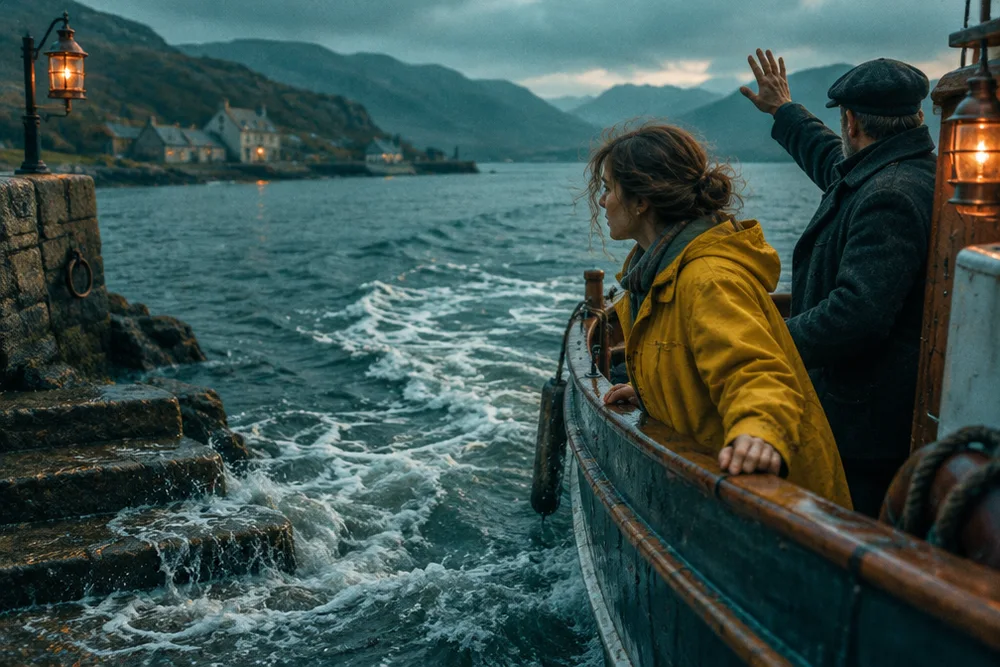
A worker in a gray cap called for the ramp. Ise didn’t answer him. Gwenna felt the whole queue holding its irritation in the space between them. Every delay had a cost, and everyone on the landing could count it.
Ise released the line. “You want me to say yes in front of all of them?”
“I want to know where he is.”
“Then you should be asking what he was doing there.”
Gwenna took the folded diagram from her coat. Its edges were softened from being handled. She kept it closed. “I’m asking you what happened.”
Ise stepped to the ramp. “Get on if you’re coming. We’re holding up people who have places to be.”
Gwenna moved to the side, clearing the way. The passengers filed aboard in a narrow stream, shoulders turned, work bags held close. A woman carrying a paper sack nodded at Ise and said, “Morning,” as if nothing unusual had interrupted the departure. Ise answered her by name.
Gwenna watched the names pass through the routine. A man with a blue lunch tin. Two young women in matching clinic tunics. A boy whose school tie was still untied. People whose mornings depended on the boat’s small, ordinary promises.
The last passenger stepped aboard. Ise pulled in the ramp and shut the gate. “You can ride to the far landing,” she said. “You can ask me there.”
“The tide’s coming up.”
“I know what the tide is doing.”
“The lower path at Needle will go under.”
Ise’s eyes flicked to Gwenna’s face. There it was: not surprise, exactly, but the recognition that the question had reached the thing beneath it. She turned to the controls.
Gwenna held on as the boat nosed away from the landing. The wake slapped the steps and swirled around the lower stone. A man at the rail lifted his hand to someone on shore; the gesture went unanswered, swallowed in the distance.
She could have told Ise what the raw sheets showed. She could have told her that her own initials were there, beside the fares she had erased from the returns. Instead she waited. She had come to ask for a location, not to offer a defense.
“How long until high water?” Gwenna asked.
“Long enough to get there,” Ise said. “Not long enough to stand around once we do.”
They crossed the sheltered cut toward the far bank. The route ordinarily took so little time that people used it to finish conversations they had started on shore. Today the passengers kept their eyes on their phones, or on the gray water, or on Ise’s hands at the controls. Gwenna stood beside the cabin door and felt the folded diagram soften in her fist.