Before the Bell at Low Water
Page 236 of 247
Chapters
“Tomorrow,” she said, “I’ll walk you to school. Della won’t have to collect you.”
“I know.” He took another bite. “You said that already.”
Gwenna’s throat tightened. “I did.”
“I’m not checking up on you,” he said. “I just wanted to know.”
“You don’t have to remind me,” she said. “I’ll be there.”
The next morning, Gwenna walked Kit as far as the school gate. She did not carry her work bag. The day’s records were waiting at the terminal, but their existence did not make the path from home less real. Kit’s knees turned inward as he stood by the gate, lunch tin in hand.
“After school?” he asked.
“Della today. I’ll collect you tomorrow.”
He nodded, apparently satisfied. “Don’t forget your pencil.”
She glanced at the brass clip on her coat, then laughed. “I’ve got one.”
He went through the gate without looking back. Gwenna waited until he reached the entrance before turning away. It was a small interval of time, hers to spend, and she did not try to turn it into proof that everything had changed.
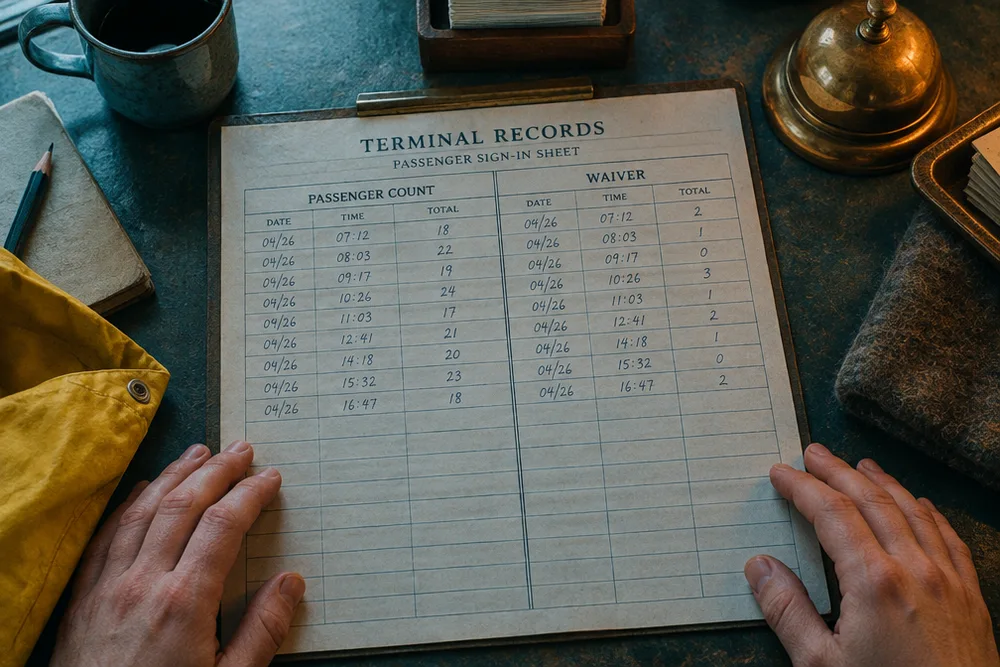
At the terminal, the new sign-in sheet lay beside the dispatch window. The independent dispatcher’s name was at the top. Gwenna’s was listed under records, with the hours she had negotiated. Beside the schedule, the service board had posted the trial’s ordinary capacity and the funded waiver terms. No small pair of seats was reserved apart from the count. A waiver passenger took space like any other passenger; the fare column could be different without making the person vanish.
Gwenna signed in at eight. The records cage smelled of paper and old metal. She took the day’s first working sheet from its sleeve and checked the vessel tally against the passenger count. A rider reference appeared in the restricted column; the public report would show the journey, not the name.
She followed the procedure in order. The passenger went into the count. The fare went into its own field. The second signer checked both, then added a note about the funded waiver before closing the return.
Gwenna did not feel repaired. The warning remained, and the missing job remained someone else’s. But the record held the ride without exposing the rider, and held the count without pretending the fare was the passenger. She entered the total, waited for the second signature, and only then closed the ledger.
Outside, the brass bell waited for its permitted hour.