All the Ears of Clay
Page 41 of 279
Chapters
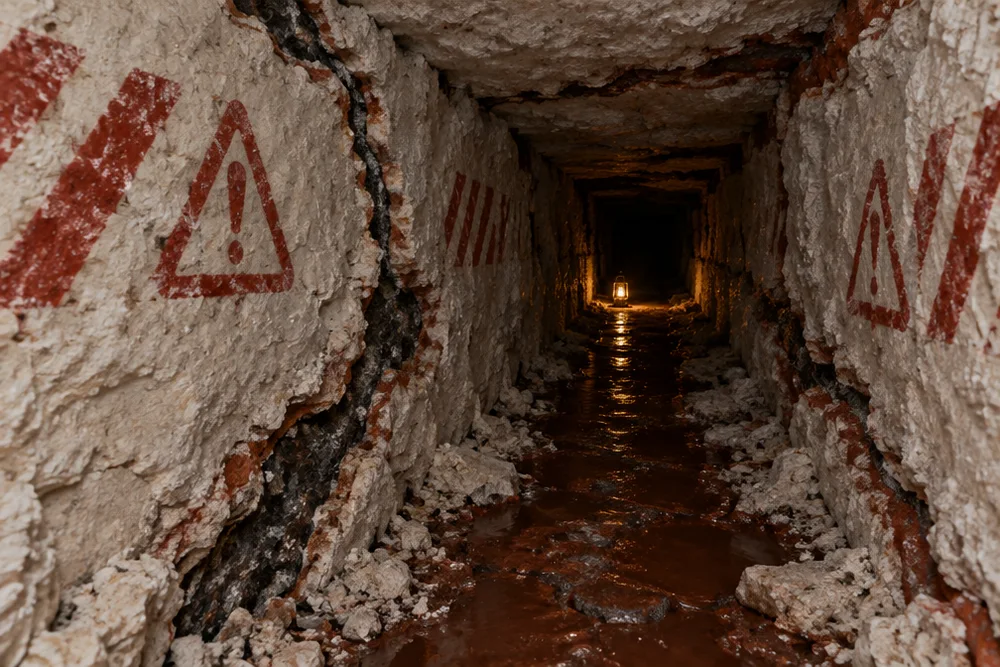
The drift narrowed as they walked. Ressa brushed the walls with her fingertips. Salt crust broke under her nail, exposing dark seams that ran a few inches, then vanished. She had fired enough mineral clay to recognize black traces; the threads here were thinner and broken, like ink dragged through a wet thumbprint.
“You said reserve,” she called ahead.
“That is what the old survey called it.”
“A reserve is something kept back.”
“Sometimes it is something people hope is still there.”
His words irritated her more because they sounded like something she might have said herself, if the kiln had been someone else’s problem. Ressa glanced at the chalk marks on the walls. Extraction had followed every workable thread, then pushed farther, then marked the next guess as a reserve. The labels had outlived the material.
The cart bumped over a ridge. Holl steadied it with one hand. “The last crews were told the seam would continue around the bend. Their slips show what they removed. They stopped when the wall gave them nothing they could cut.”
“And no one changed the number?”
“They changed the slips. The estimate was already in the book.”
Ressa reached the bend. The lamp’s thin light showed a pale wall ahead, unbroken except for tool scars.
Holl parked the cart. Ressa stepped past him and ran her palm over the end wall. It was salt all the way across, a pale solid face, with no black mineral threads and no seam beneath the tool scars. She scraped at one shallow groove with her thumbnail. Powder gathered under it. Nothing darker showed through.
“How far did you follow it?” she asked.
“Far enough that I stopped trusting the chalk.”
“Could there be another branch?”
“Not one we can reach without surveying new ground. And not one we can count as fuel before it’s found.”
Ressa crouched. The wall seemed smooth from standing height, but close to it she could see where picks had left little fans of pale chips. She studied the cuts for a sign of a last fragment buried behind a crust. There was none. She looked back at the cart, then at Holl’s lamp. The reserve was not hidden. It had been spent, or never existed in the quantity the books had repeated.
“The roof estimate used this number,” she said.
“Your estimate used the cooperative return.” Holl’s bowed legs shifted as he straightened. “I signed the return. I am not asking you to trust my memory. I am asking you to read the extraction slips.”