All the Ears of Clay
Page 37 of 279
Chapters
They left the fragments on the dry tile and returned to the bath. Ressa had expected the test to be quick: a voice or no voice, a clean difference or none. Instead, it had given them two small pieces that might have failed for a dozen reasons. The clay had come from the right place, but not from the exact handful used for the child’s tile. The cookstone was not the Heel Kiln. The fragments were thin, the heat modest, the cooling hurried by necessity.
“We should not call that a result,” Ressa said.
“We should call it what happened,” Miri replied. “Neither piece spoke.”
“And what does that tell us?”
“That we need more tests.”
“We need to know whether more tests are worth the fuel.”
Miri’s mouth tightened. “If the voice matters, shouldn’t we find out?”
“If we spend the town’s last fuel chasing it, we may have learned nothing useful and left the bath roofless.”
“The bath is already roofless.”
“The roof order is not.”
Venn brought the old firing record from the cabinet and laid it open beside the slate. “The record says one tile spoke. It doesn’t say they repeated the firing. Perhaps this was all anyone could afford.”
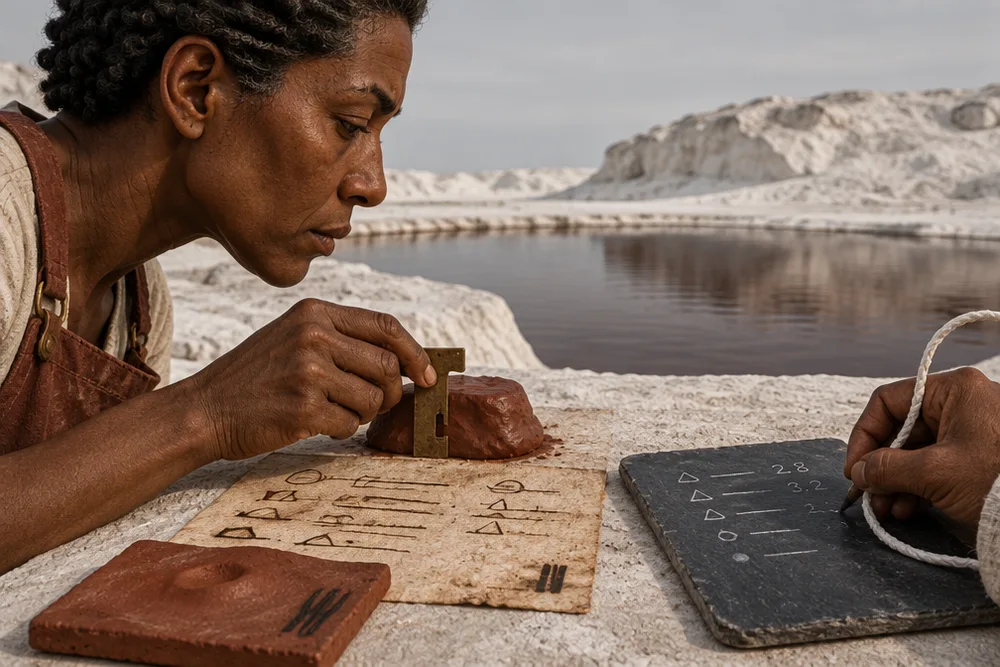
Ressa looked at the note. “Or they didn’t think it mattered.”
“Either way,” Venn said, “the person who wrote it left the tile on a shelf until the sound stopped. They did not build a plan around it.”
Miri touched the slate’s blank lines. “They didn’t have this child’s words.”
“No,” Ressa said. “They had a different fragment.”
The old firing note gave them another voice, another apology, but not a bridge between the two. They could not know whether the black-thread clay stored apologies, whether heat caught a sound that had never happened, or whether the fragments were coincidences shaped by the hearer’s need. They could at least stop changing the speaker and the words at the same time.
“Two fresh pieces from the same sample,” Ressa said. “I say the same words to both, from the same distance. With one, I mean the apology for the clay. With the other, I’m only saying the words. We bring them in one at a time so neither hears the other’s turn. Then we give them the same heat and the same time to cool.”
Miri picked up the clean clay. “And if neither speaks?”
“We record that too.”
“And if only the one you meant it for speaks?”
Ressa glanced at the wrapped tile in the crate. “Then we try it again before we say who the words were meant for made a difference. It still won’t tell us what the voice means.”