All the Ears of Clay
Page 28 of 279
Chapters
“The boiler was repaired twice before I took the post,” he said. “The notes for the first repair were filed with the kiln records because the crew made replacement fittings.”
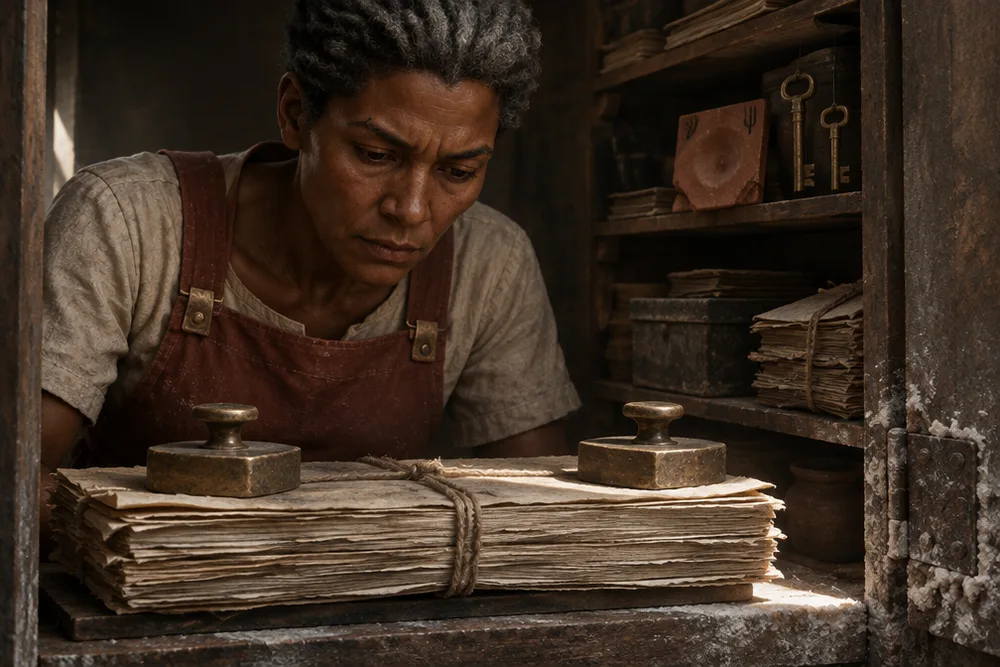
Ressa untied a bundle. She had expected diagrams of vents and measurements of iron feet. Instead, a thin sheet slipped loose and landed face down on the shelf. On its back, someone had drawn a tile arc in faded red. The date was thirty-one years old, written in a hand that had pressed through the paper.
“That’s before you were attendant,” Ressa said.
“By nine years.” Venn pulled a second bundle forward. “I was still washing at home, when I could get enough water.”
Miri looked up from the shelving. “You used the bath?”
“When it was open. Everybody did. That’s why we keep fighting over it.”
Ressa studied the bundles. Some records carried firing marks—small circles, wedges, a tally of fuel loads. Others had names and repair wages. There was nothing mystical about the cabinet; it was a work record, and its carelessness showed. Slips had been shoved between volumes, folded into corners, or reused as wrappers.
“We’re looking for anything about black-thread clay,” Ressa said.
Venn lifted one brow. “And if we find it?”
“Then we’ll know what happened before.”
“That’s not always the same as knowing what happens next.”
“I know.”
He rested his hand on the shelf, not the tile crate. “Do you?”
Ressa did not answer. Venn turned back to the cabinet and began checking the older bundles, giving her room to be silent. Miri took the records with dates closest to the boiler repairs and laid them in order on a low table. She kept the paper edges aligned, even when the ink ran into itself.
The first notes described the old boiler skirt, its cracked rivets, and a patch of clay dug from beneath the south foot. The second recorded replacement washers and a bent flue. Neither mentioned a voice. Ressa read each line twice, searching for a name or a mark that tied it to the tile. There were costs, weights, initials. People had been careful about the work they could be held responsible for.
“This one is not a repair note,” Miri said.
She had found a narrow sheet folded inside the cover of a ledger. Its edges had darkened, and the ink was brown but legible. Venn crossed the room, keeping his hands off the loose paper until Ressa had flattened it with two clean weights.