All the Ears of Clay
Page 190 of 279
Chapters
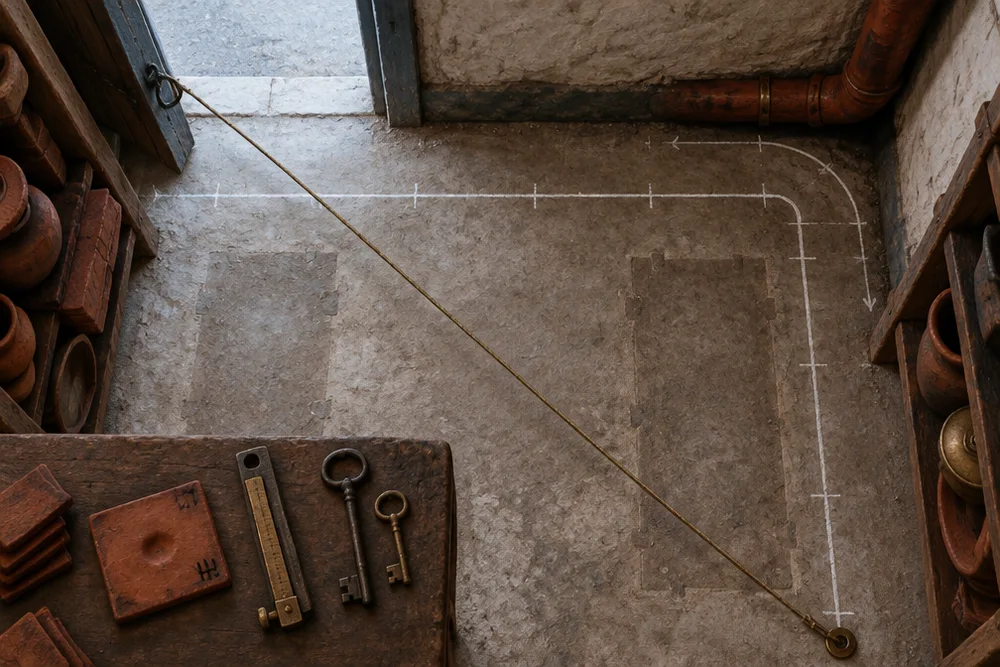
The room had never been large, but Ressa had treated its limits as a kind of inheritance. The racks made a boundary around her work. Outside the kiln, people could ask for figures, argue over fuel, or bring her one more urgent task. In here, the clay had no vote and no voice until she gave it one.
Miri laid the measuring cord along the floor, then fed its end beneath the lowest rack. “The bend could sit here,” she said. “The return would pass under this wall and come out at the drain channel.”
“If we remove the racks,” Ressa said.
“And cut the bottom shelf supports,” Miri answered. She did not look at Ressa. “Maybe the upper frame too. We need room to fit the collar without forcing it.”
Ilo entered last, ducking beneath the lintel. He took measurements from the wall and floor, marking the points in chalk. “The storeroom route stays inside the bath lease. It doesn’t cross the drying beds. But I need to see the actual bend and the support after it’s set. If either is unsafe, the workers can reject that section.”
“They already can,” Ressa said.
“They can reject it without you making them feel they’ve rejected the whole bath,” Ilo replied. “That’s what I’m asking for.”
The words landed more sharply than the measuring marks. Ressa looked at the chalk line he had drawn across her floor. It ran through the place where her mother’s oldest rack stood.
Venn leaned in the doorway, not entering. “I can help move the shelves after the approach is safe.”
“This is my room,” Ressa said, more quickly than she meant to.
“Yes,” Venn replied. “That’s why you get to decide what leaves it.” He kept his arms close to his sides. His two keys swung once, then went still.
For a moment Ressa could hear only the wind beyond the walls and the faint click of the cord against a rack leg. The room had been hers because the bath had needed somewhere to keep its work. Now the bath needed the room itself.
Ressa bent to the lower rack. One of its stone feet had been wedged level with a chip from a cracked tile, a piece she recognized by its thumb-smoothed edge. Her mother’s habit had been to save every useful fragment, even when it meant storing more than the next job could use.
“We can shift the rack to the outer wall,” she said. “Leave the upper shelves intact.”
Ilo checked his marks. “Not with the bend there. The collar needs clearance to turn, and the support needs to be reachable after we bury the line.”